Uncategorized

Finding the Kidds in the Registry of Deeds

In earlier posts we have looked at a variety of sources related to the Kidd family. These documents include a surviving will. There are also family letters and newspaper entries. Additionally, there are the diaries of James Harshaw, who was the executor of the will. In this post I want to highlight another important source for 18th and early 19th century, The Registry of Deeds in Dublin. In its records there is another document that highlights what happened to one of the Kidd family farms after the court case.

Kings Inn Dublin
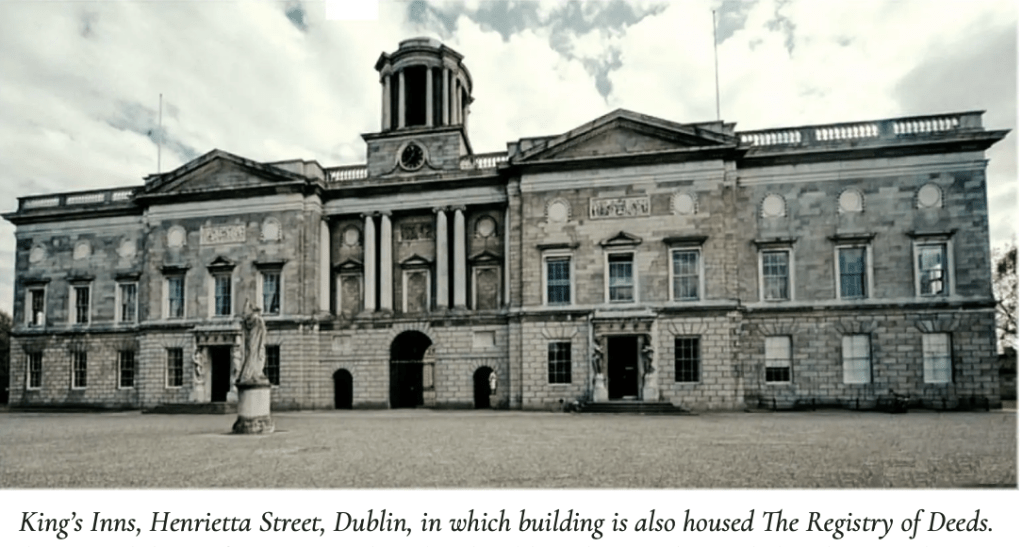
Photograph by “informatique” (2007); edited by Alison Kilpatrick (2021). Digital image online at Wikimedia Commons commonswikimedia.org (accessed 31st Jan. 2021); posted under Creative Commons Licence CC BY-SA 2.0 creativecommons.org/licenses/by-sa/2.0

Registry of Deeds Ireland

(https://timeline.ie/finding-your-irish-roots/registry-of-deeds/). The Registry of Deeds is the repository of the memorials of wills, land transactions, and other deeds recorded in Ireland. It was established in 1708, its earliest records date from 1709. Initially, many of the deeds are related to the large landowners and wealthy merchants. As time goes by, more small farmers, artisans, and merchants appear in their pages. However, registration was never obligatory, many transactions took place outside the system. Equally, given the way in which the memorials are indexed, finding a particular deed or individual is not easy. Nevertheless, this repository is particularly useful in Irish research. This is especially true if you think your ancestor owned property.

FamilySearch Online Resources

The body of the documents in the Registry of Deeds has become much more accessible in recent years as it is now available on FamilySearch at: https://www.familysearch.org/search/catalog/185720 . There are many volumes and they are indexed, but only the grantor (the person who is selling or transferring the property) is included in the index. There are also land indexes which can be useful if you know where your ancestor lived.

Fortunately, I have been involved with an indexing project on the contents of the deeds for a number of years and have been learning to work my way around them. https://irishdeedsindex.net. I have discovered unexpected information on several branches of my family and have been able to delve back into the 18th century, always a goal in Irish genealogy.

Family Tree
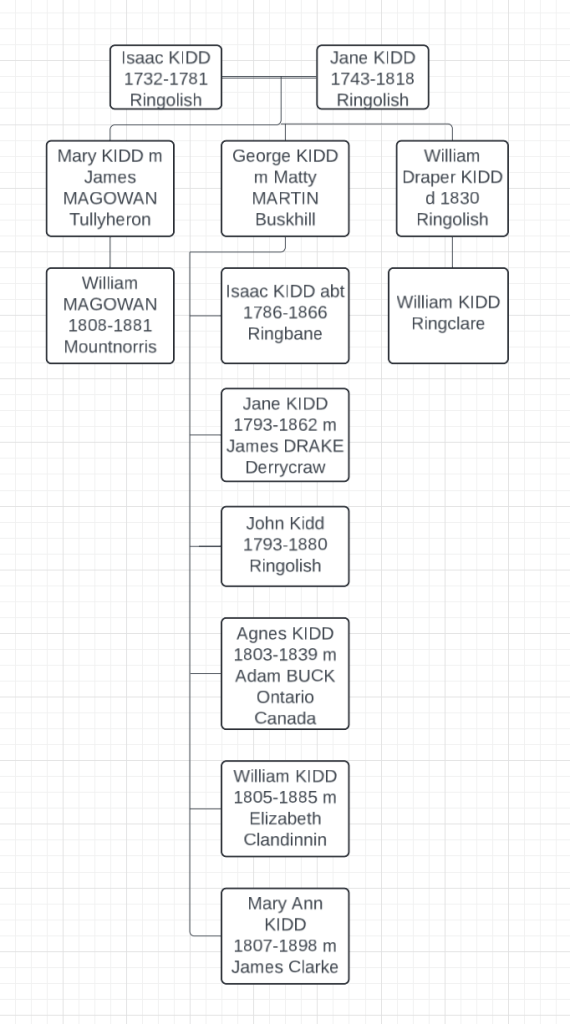
But, before we look at the Registry of Deeds information, here’s a reminder of the Kidd family involved in this convoluted series of legal proceedings and documents. In 1854 the Court of Chancery established that the proceeds of the sale of the farms in dispute would be divided between the descendants of the three children of Isaac and Jane Kidd as detailed left. George had six children so his share should have been divided in six. However Agnes (Nancy) Buck in Canada had died by 1839 and she is not mentioned in subsequent proceedings so her family may have been left out of the settlement. My hypothesis is that my great great grandfather William Kidd of Buskhill was the William, son of George Kidd. Why?

Because I know from his birth record that William was the son of George Kidd of Buskhill.

Because I have DNA matches with descendants of four of the five other children of George Kidd. However, I still have a niggling doubt that I may have jumped to a false conclusion. Nowhere in these documents has William been specifically recorded as William Kidd of Buskhill.

In Which the Kidd’s Long Legal Struggles are Finally Settled
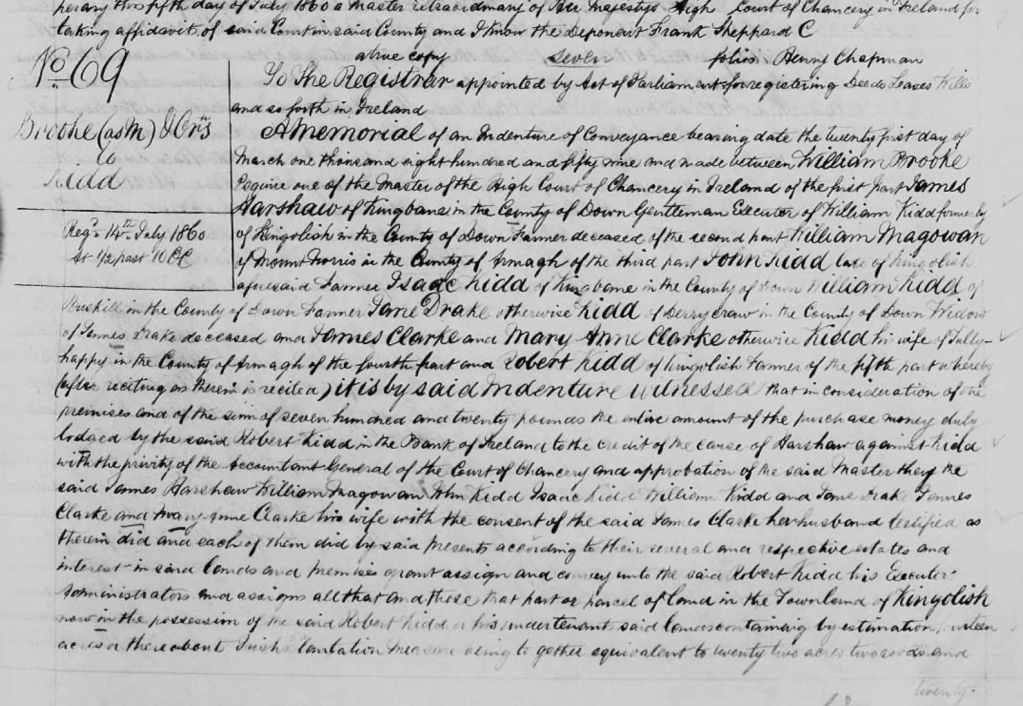
As discussed in my last blog post https://archivedust.org/2024/09/29/examining-the-kidd-inheritance-dispute-through-james-harshaws-diary/ James Harshaw’s diary has been an invaluable resource in finding further information on the Kidd family’s legal disputes. Returning to his writings, I found this entry where he noted that on the 29th  June 1860 he “met with William Magowan and William Kidd in Mr. Todd’s office where we agreed to settle the Kidd’s lawsuit and directed Mr. Todd it be wound up by distribution of the £920 by the sale of the Ringolish farm (occupied by John Kidd) and six and a half acres of the Ringbane Farm (occupied by Isaac Kidd)”. Given the long history of this legal dispute, I wondered if the sale might have been considered important enough to have been recorded in the Registry of Deeds.

The Deed is Done

The point of entry to this transaction, if it was recorded, would be the name of the executor of the will, James Harshaw. And sure enough, there was a deed registered on 16th July 1860 with James Harshaw in his role as executor, in company with William Brooke, one of the Masters of the High Court of Chancery in Ireland, and William McGowan of Mountnorris, Co. Armagh, and with John Kidd late of Ringolish, Isaac Kidd of Ringbane, William Kidd of Buskhill, Jane Drake otherwise Kidd of Derrycraw, and Mary Ann Clarke otherwise Kidd of Tullyhappy, making over the lease of the Ringolish farm to Robert Kidd of Ringolish.

Gleanings

Do we learn anything new from this document? The answer is yes!

Yeah, This is my Ancestor William Kidd!

  • Firstly and most importantly, it proves that the William Kidd involved in all these court proceedings was indeed my ancestor. For the first time William Kidd is specified as being of Buskhill. In 1860, when this sale took place, William Kidd’s daughter, my great grandmother, Agnes Kidd was 30 years old, still living at home, she would surely have been very aware of all the headache and financial difficulties caused by this ongoing dispute. perhaps she and her siblings benefited from the proceeds of the eventual sale.

Whatever Happened to John Kidd?

  • Secondly, the deed says that John Kidd was late of Ringolish. This does not mean he was deceased, but rather that he was no longer living there. Through Isaac Kidd’s will in PRONI, I have been able to show that several of Isaac’s children were living in County Tyrone, while others were still in Donaghmore at the time of his death in 1866. But I have no information on John Kidd’s descendants. This is strange in that, as I also mentioned in a previous post, the same parcel of land in Ringolish occupied by John Kidd in 1854, 22 statute acres and change, that is further mentioned in this deed of 1860, is still occupied by a John Kidd in the 1864 Griffiths valuation.

The Invaluable James Harshaw

  • Harshaw’s Diaries once again provides snippets of relevant information. On 16th November 1861 James Harshaw records that he visited Robert Kidd and his mother. On the 1st December he mentions again that he visited Robert Kidd and on the 7th December he notes that Robert died. On the 9th December he writes that he visited Mrs English Joe Kidd in consequence of the son Robert’s death and on 10th December he records that he attended Robert Kidd’s funeral. I know from others deeds from the 1830s that the English Joe Kidd family lived in Ringolish so there seems a strong possibility that this is the Robert Kidd who bought the disputed farm.

And Where is Draper Kidd’s son William?

  • Thirdly, what happened to the other William Kidd, Draper Kidd’s son in this deed? This William Kidd (of Ringclare) and William Magowan were the ones who met at the lawyer’s office mentioned in James Harshaw’s notes in June 1860. They directed that the estate to the value of £920 be wound up. However, this deed of July 1850 only relates to the Ringolish farm which sold for £ 720. Did Draper Kidd’s son, William Kidd get the value of the Ringbane farm, the other £200?

Final Questions and Opportunities for Further Research

Did occupation of the farm in Ringolish return to John Kidd after Robert Kidd’s death? Is there more information to be found in the Registry of Deeds? Is this a different John Kidd in the Griffiths Valuation of 1864? Will I find a DNA connection to John Kidd? I have new edge pieces to the Kidd puzzle!
Smith Family

Witness to (Ancient) History

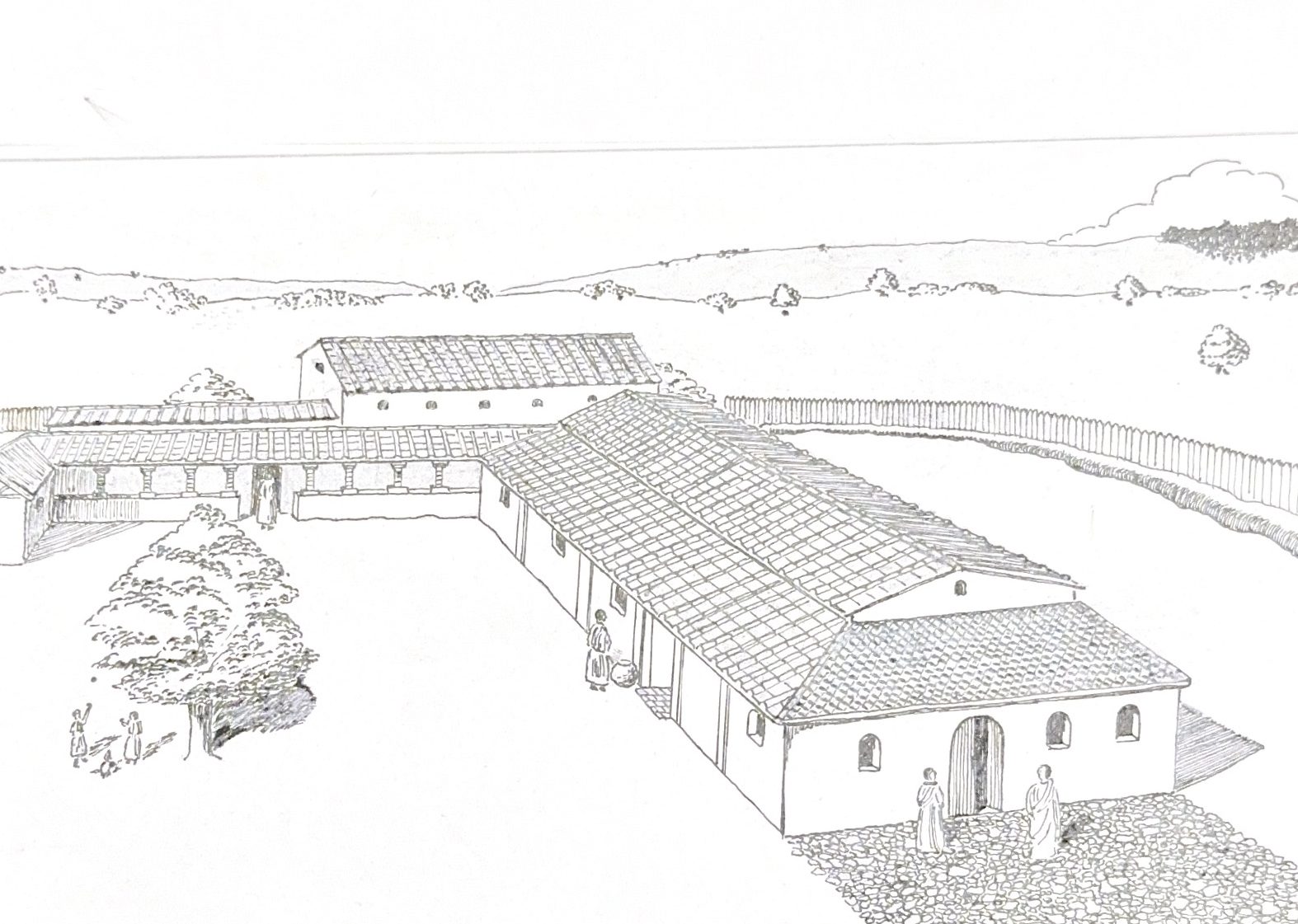
A sketch of the Roman Villa excavated at Potter Hill, Norton Disney, Lincolnshire

In an attempt to get me started on writing this blog, I have signed up to the Amy Johnson Crow 52 Ancestors 2024 prompts. I’ve still managed to miss the first 3 weeks of 2024, but here, finally, I have some inspiration. This is the story of how my husband Malcolm’s grandfather and great-grandfather were directly involved in uncovering ancient history and creating a little bit of history of their own in the process.

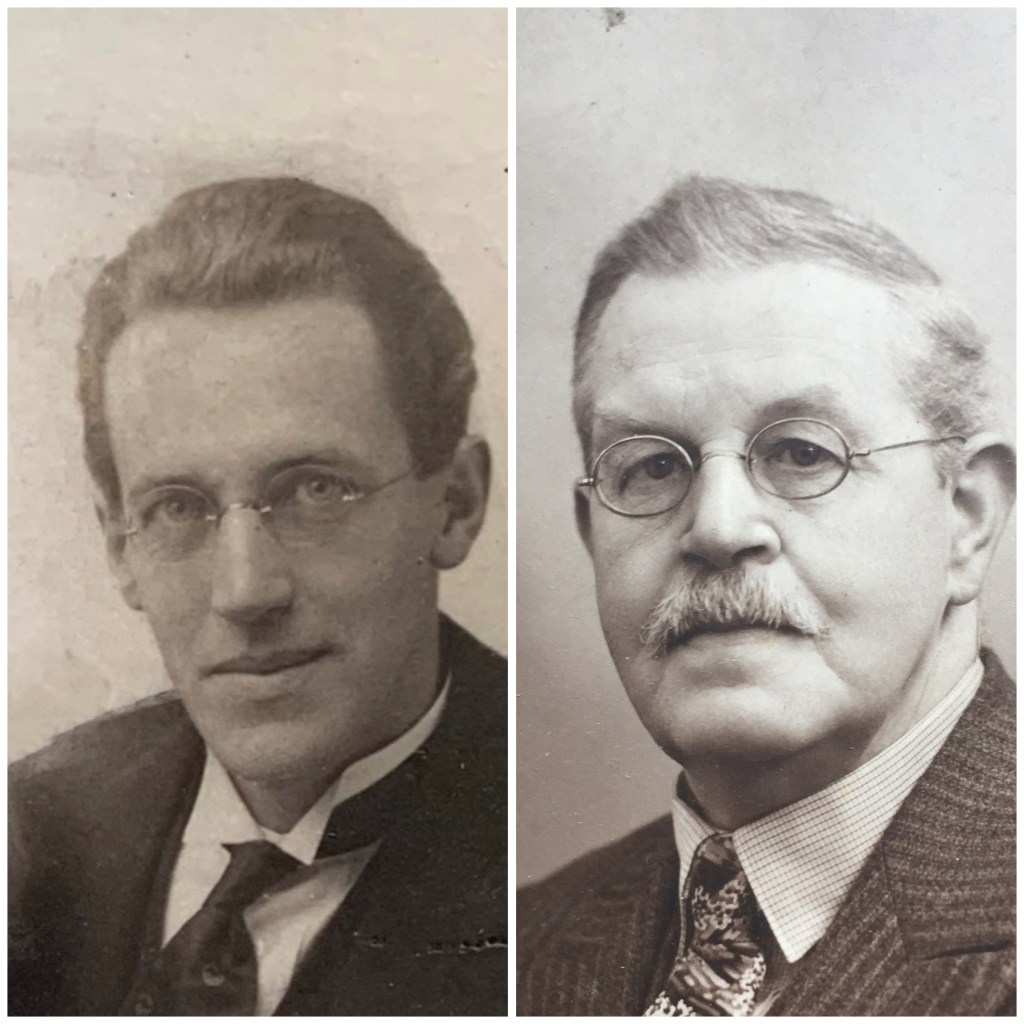
Arthur Smith junior, Malcolm’s grandfather, was for 41 years (1919-1960) the curator and librarian at the Gilstrap Museum and Library in Newark-on-Trent, Nottinghamshire. He was the son of Arthur Smith senior, who was the curator of the Lincoln City and County Museum, Lincolnshire from 1900-1934. The two men, father and son, were alike in many ways, including similar interests in historical research and archaeology and no doubt, their museums being only 20 miles distant from each other, they often had reason to collaborate.

Above left: Arthur Smith 1893-1979 Above right: Arthur Smith 1869-1949

One of the family stories about the two Arthurs was that they had jointly excavated a Roman villa on the Lincolnshire/ Nottinghamshire borders. 

We had no details on the excavation but after a recent conversation, I did a google search for “Roman Villa, Nottinghamshire” which brought up a 30 minute talk on the Collingham and District Local History website, by Richard Parker, on the Potter Hill Roman Villa at Norton Disney https://www.youtube.com/watch?v=vCsrSOd0YZg. Richard, a local historian, has thoroughly researched the excavation of the villa and other archaeology that lies in the surrounding area. The field where the villa lies has been threatened by development and, as a result of Richard’s work, the entire site, not just the villa, has been scheduled by Historic England. This means it is considered nationally important.

While I expected that there might be some mention of the two Arthurs, imagine my surprise when 5 minutes into the talk, Richard went into detail on the discovery of the villa, how in 1933 a farmer by the name of Fred Taylor had walked into the Lincoln Museum to find Arthur Smith senior and produced a handful of tesserae from his pocket.

“Where on earth did you get those?” was Arthur Smith’s astonished question. Arthur senior then got onto his pushbike and pedalled down the Fosse Way to Potter Hill, where he found an archaeological treasure. He enlisted his son, Arthur junior’s help and within a few weeks they had excavated a Roman pavement. This was big news at the time and gained widespread attention, but the excavation site was kept secret.

From here onwards, the plot thickens. Arthur Smith senior, possibly because he was approaching retirement, or, because the responsibility for the site was in Newark rather than in Lincoln’s purview, handed oversight of the dig to Arthur junior. The archaeological establishment did not appreciate this move as Arthur junior had no previous excavation experience. 

Richard Parker tells us that there is an extensive file at the National Archives on the case with letters from other archaeologists to the Inspector of Ancient Monuments objecting to Arthur junior taking over the site, one even going so far as to say he was sending out spies to discover the location. There is a letter from Arthur junior himself saying that he will fight to the last drop of blood to retain control of the dig.

The Inspector of Ancient Monuments scheduled the villa site in May of 1934. The Office of Works appointed an academically qualified archaeologist, Adrian Oswald, who worked in conjunction with Newark Museum.

Anyone who has seen the film “The Dig” may be experiencing déjà vu at this point!

In the end there were two seasons of digging in 1934 and 1935. A Roman villa, more akin to a large country farmhouse than a palace, was uncovered together with many artifacts. 

I sent an email to Richard Parker telling him how excited we were to hear the story of the excavation. He sent me a link to slides of the dig from the 1930s.

Among family papers we have a lovely old wooden box with Arthur Smith’s name on it. A search through it uncovered the text of a slide talk on the dig that Arthur had given at various points between 1937 and 1969. It turns out that this matched Richard’s slides; we had two pieces of the same puzzle. Richard was able to marry the text and slides together and gain further insight into the excavation.

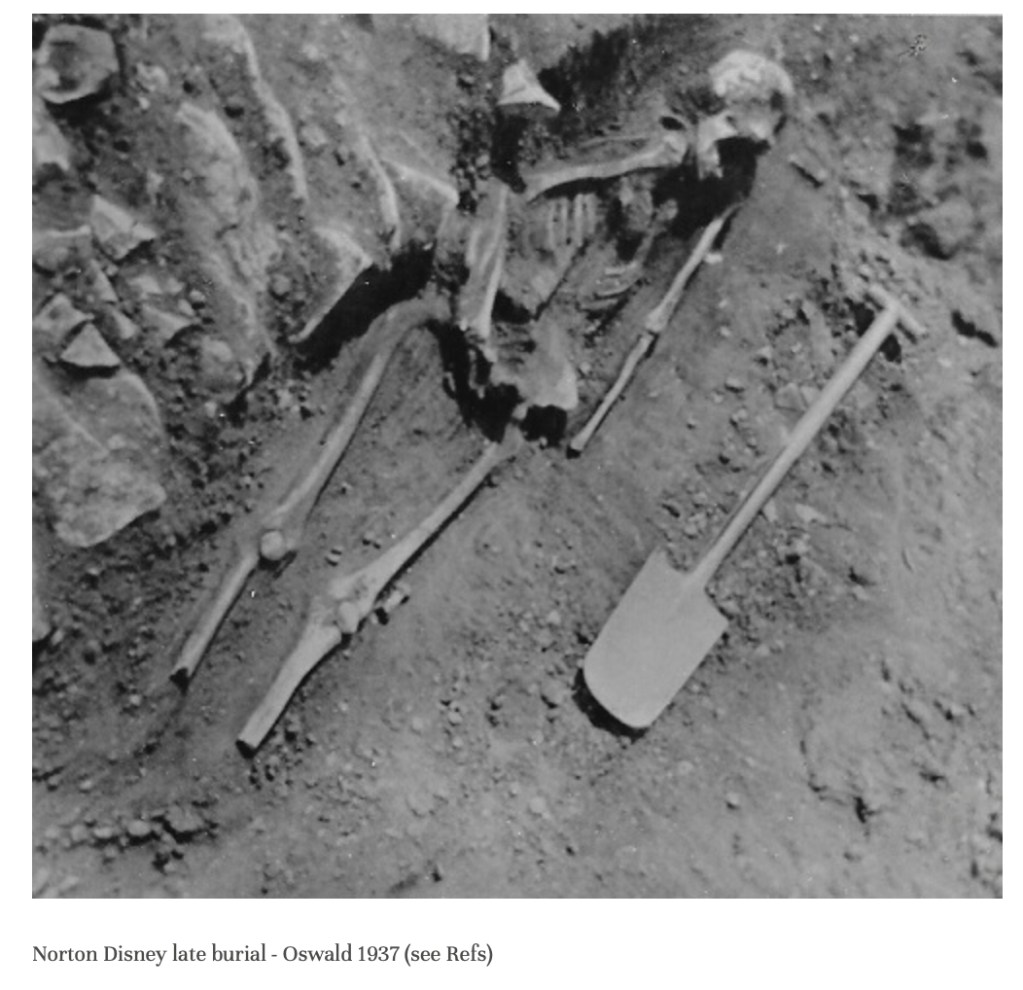
One of these slides was of a skeleton without feet. The appointed archaeologist had hired the road diggers and their machinery from Newark Corporation to help at the site. There was speculation that this heavy machinery was the reason for the skeleton’s missing feet. Arthur Smith junior was the most meticulous of men; a family story goes that he trimmed the edges of his lawn with nail scissors. He would not have been amused by rough and ready digging!

There is so much more to the story of Norton Disney Roman Villa. It is still being added to as small digs have restarted in recent years. In the 2023 season a Roman dodecahedron was uncovered and featured this January on the BBC television program, Digging for Britain. The site itself is considered important as it tells the story of a transition from an Iron Age Society to a Romano-British one.

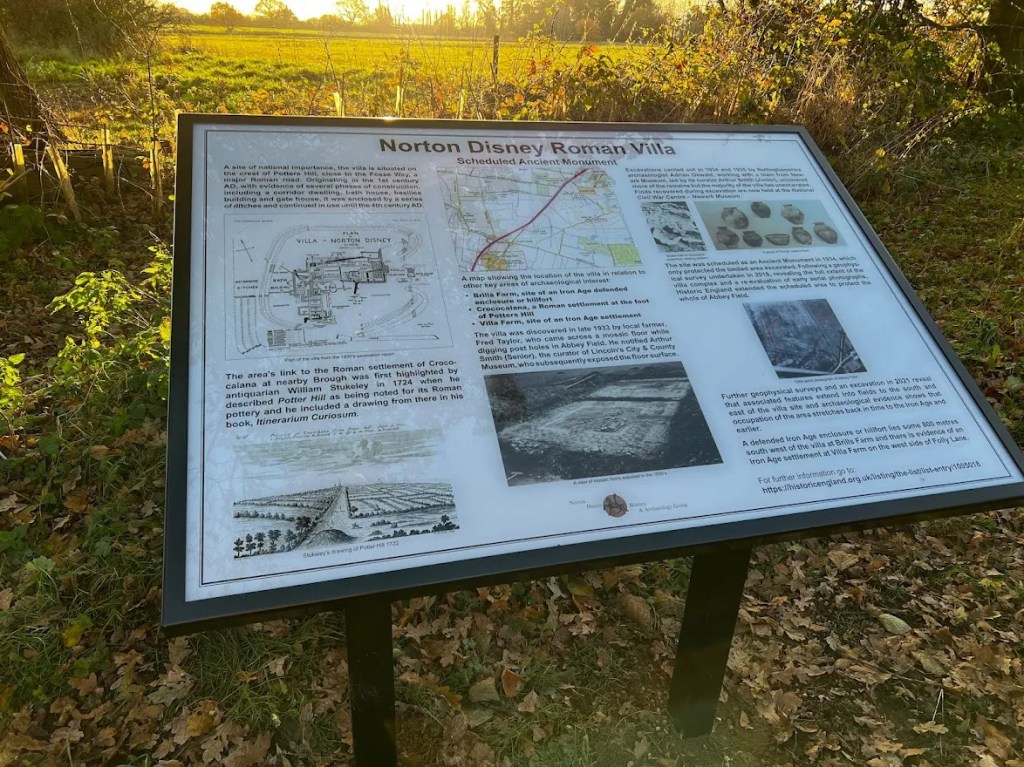
The Norton Disney History and Archaeology group have added an Interpretation Board at Hill Holt Wood near the villa

Returning to the family history aspect of this story, Arthur Smith senior would certainly have continued to take a vicarious interest in the site. But, how did Arthur Smith junior feel about the responsibility for the dig being taken from him? There is a clue in his text for the slides where he says that the discovery of the tessellated pavement was, “the beginning of much heart-ache, back-ache and expense.”

Being a witness to history, even history long passed, is not always easy.

References: Oswald A 1937 ‘A fortified villa at Norton Disney, Lincs’ in Antiquaries Journal 17;

https://nortondisneyromanvilla.wordpress.com

Uncategorized

It All Begins with Me (and You and Aunt Ada)

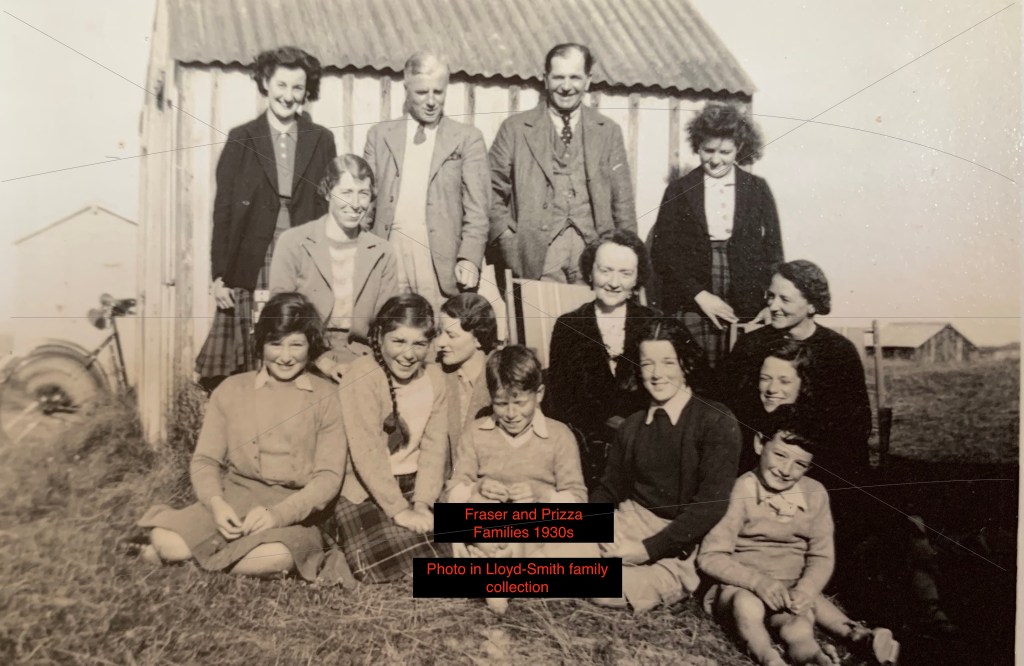
When Cousins Meet. Family reunions are a chance for conversations about the ancestors. This photo from the late 1930s shows the Fraser family of Croy, Inverness-shire, Scotland meeting up with their cousins, the Prizza family from Prague.

The First Law of Genealogy, if such a thing exists, is to start with yourself and work backwards.

Talk to your family members while you can, ask them basic questions, find out what information they have before it is too late. You may not be who you think you are, the advent of DNA testing has brought this uncomfortable truth home to many.  Long before DNA tests were a thing, people had big surprises when they started investigating their ancestry; there is nothing new under the sun (especially when it comes to human relationships).

Numerous lists of the relevant and important questions to ask are out there in books and on websites. What I want to talk about here is how to ask those questions and discuss some problems that you will find with the information you receive.

Let’s start with a multiple choice question.

Is your Family:

A Always truthful

B Deluded

C full of dissemblers and obfuscators!

 D All of the above

No matter what you might think right now, the answer is more than likely D, all of the above.

I first heard an apocryphal story when I was studying for the IHGS (Institute of Heraldic and Genealogical Studies) Certificate with Richard Baker. It goes like this. A certain lady believed she was descended from one of the Dukes of Buckingham. She spent time and effort over a number of years following the descendants of the various Buckingham names but could never find a connection to her own family. Then, she did a genealogy course where she learned to research starting with herself and working backwards. She talked to family, looked at censuses and birth, marriage and death records, did her homework and discovered that her great grandfather had owned a pub called The Duke of Buckingham.

Her family story was partially true, there was a link to the Duke of Buckingham, it was just by brick and mortar rather than by blood.

Brush up on your Conversation Skills

So, let’s talk about your Aunt Ada. She is the last person left alive in the oldest generation, your great-aunt, your grandfather’s youngest sister, who is approaching 85 years old. You have arranged to visit to ask a few questions.

Aunt Ada may be a friendly lady who loves visitors and plies them with tea and cakes, a people pleaser, she will try her best to give you answers. She may equally be a curmudgeon who does not suffer fools gladly. You will only get the information she wants to give.

You go along with your fancy iPhone to record the conversation.  Aunt Ada might be thrilled by new technology but unable to understand why you are recording her, caught up in the moment she may embellish just a little… Aunt Ada, on the other hand, could be distrustful of modern gadgets and think you are there to take advantage of her. 

Explain the technology you are using. Don’t use it if she is uncomfortable. A pencil and paper are still the simplest way of recording information. Talk to Aunt Ada about her interests (find out in advance what they are if you haven’t seen her since you were 6 years old). Do not press too hard for answers where none are forthcoming; you do not want to fluster your elderly relative into giving you wrong information. 

Remember that Aunt Ada is not obliged to tell you what she knows. Be nice to her! I am reminded of the Aesop Fable about the north wind and the sun, gentle persuasion is more effective than hostile questioning. (I love Aesop’s Fables.) https://aesopsfables.org/F6_The-Wind-and-the-Sun.html . .

Ask factual questions by all means, these are the bread and butter of genealogy but ask some opened ended dessert questions as well. What did you think when your brother moved to Australia? How did your mother feel? (This may recall a memory of an older family member who also emigrated.)

Listen! This is not about confirming what you already know but about finding new information. None will be forthcoming if you do all the talking.

Keep in touch.  Arrange a subsequent visit or phone-call as Ada may then have had time to think about some of the questions you asked. 

Family Feuds

It may be that great Aunt Ada has not spoken to your side of the family in many years and has no intention of rekindling the friendship, she still holds a grudge against your grandfather for borrowing money from her when she was sixteen; money, she says, he never repaid. In this case it can be useful to enlist the help of another family member. Second cousin Bella who picks up prescriptions for Aunt Ada, could be just the person. Bella is a chatty, helpful person who hasn’t a clue how to use the recording app on her phone but she does have a level of trust with Aunt Ada that you don’t and although she may not ask all the right questions, she may gain information you would never have found out. As it turns out, Aunt Ada fell out with your grandfather because he beat up the boy (from the wrong religion) that Aunt Ada loved. She was willing to tell Bella, but not you. All these years later she hasn’t forgiven her brother or his descendants

Friends and Neighbours know your business too

Now that you are perfecting your interview techniques, take those conversation skills further.

Speak to other family friends and neighbours, anyone who is willing to talk to you. They may have the same story passed down in a different version or they may have been privy to a family secret that no one in your immediate family is willing to tell you.

Write it down

You’ve had your conversation with Aunt Ada and second cousin Bella. Now what do you do? Transcribe it straightaway.

In the moment you will remember the context. Did you think Aunt Ada was spinning tales in responding to a particular question or, hesitant to give an answer? If you wait for years before you start researching (as many of us do) you will have forgotten about your doubts. Note those passages in a different colour of ink/type.

Good Luck!

Uncategorized

This is where Belonging and Genealogy Walk Arm in Arm

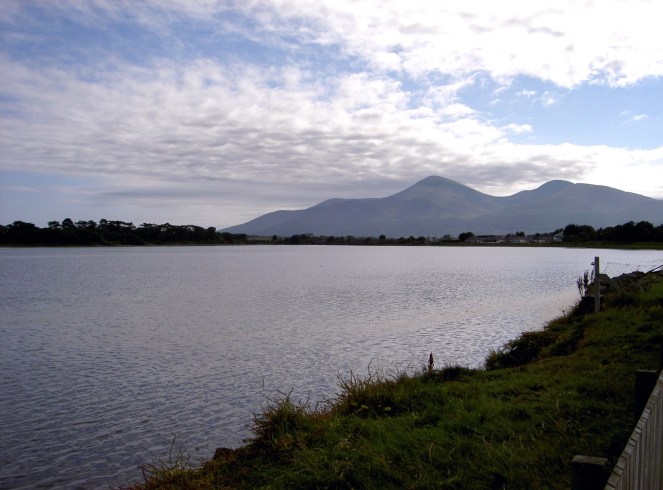
          To Be where Dark Mourne Sweeps Down to the Sea  

It took a pandemic to propel me into writing about this ache for home.

And a comment from a genealogy contact online.

“What,” she says “is a girl from the Mournes doing in California?”

“It’s a long story” I say.

The question feels all the more poignant because coronavirus has broken a bargain of 40 years.

Work has taken us to many places, fifteen homes in 25 years.  But, never completely away from County Down. Yes, I’ll go to live in Switzerland but every year I will be winging my way back to the Mournes. Our children may speak French at school but they will need to know the love and raw edges of their origins.

Yes, I’ll live in America but I will always need to feel the assault of the wind blowing sideways from the shore at Newcastle.

“Your head’s cut” I hear my family say, “no-one misses an east wind!”

No pretense is allowed. Everyone knows who you are. As a young adult I left to seek the anonymity of the city; the freedom to re-invent myself. Somewhere in the reinvention I learned that roots mattered.

For many years I would talk to family about their memories of their parents and grandparents, of the fields and farmhouses scattered across County Down, in the watersheds of the Mournes, where they had spent their early years and adult lives. I loved their stories of farming and wartime and change. It all seemed so distant, an underlying landscape, so disconnected from my life which was full of the upheaval of moving from country to country, finding schools for my children, adapting to living in different cultures. This was my change, so immediate, so time consuming, but home, it remained the same.

I was wrong, of course.

Gradually, then suddenly, the loved ones and their stories were no more. In January of 2021 my father died of COVID, I had not been able to visit him for over a year because of the pandemic. I watched his funeral by Zoom. The final link was broken. All the people who remembered my childhood had gone.

The man in the supermarket will no longer say “Your grandmother and mine were at school together” because I do not have one or other of my parents by my side as a clue to my identity.

The woman serving coffee at church will not tell me that she is a distant relative on my mother’s side, unless I explain who I am.

The mountains are still there, no less beautiful but, oh, so much emptier . More than ever I yearn to drink in the clear air, to distil that sense of home, to gather in the ties of kinship. The stories I collected, the documents I recorded, the churchyards I may still visit, these are the tangible memories of all those who went before.

This is where belonging and genealogy walk arm in arm.