Uncategorized

Finding the Kidds in the Registry of Deeds

In earlier posts we have looked at a variety of sources related to the Kidd family. These documents include a surviving will. There are also family letters and newspaper entries. Additionally, there are the diaries of James Harshaw, who was the executor of the will. In this post I want to highlight another important source for 18th and early 19th century, The Registry of Deeds in Dublin. In its records there is another document that highlights what happened to one of the Kidd family farms after the court case.

Kings Inn Dublin
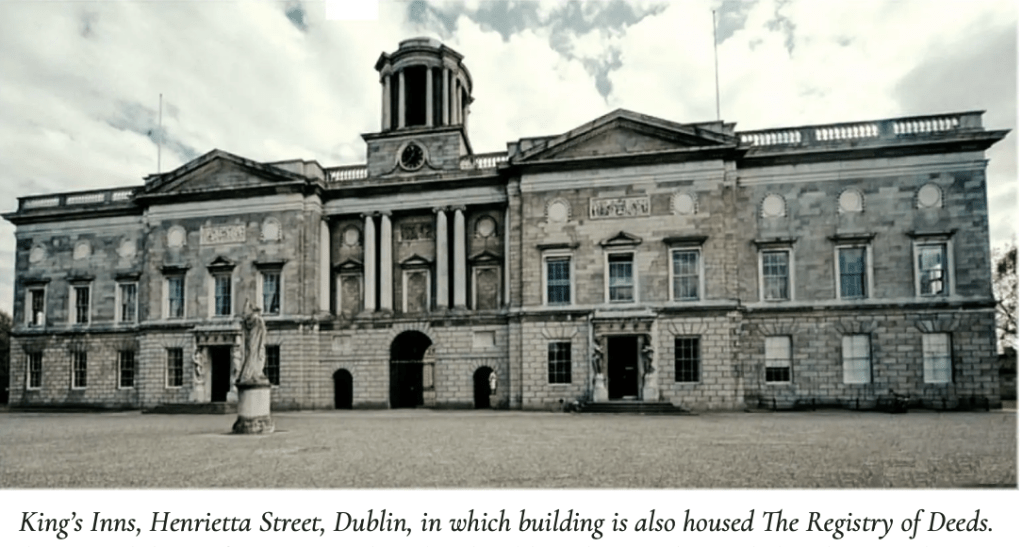
Photograph by “informatique” (2007); edited by Alison Kilpatrick (2021). Digital image online at Wikimedia Commons commonswikimedia.org (accessed 31st Jan. 2021); posted under Creative Commons Licence CC BY-SA 2.0 creativecommons.org/licenses/by-sa/2.0

Registry of Deeds Ireland

(https://timeline.ie/finding-your-irish-roots/registry-of-deeds/). The Registry of Deeds is the repository of the memorials of wills, land transactions, and other deeds recorded in Ireland. It was established in 1708, its earliest records date from 1709. Initially, many of the deeds are related to the large landowners and wealthy merchants. As time goes by, more small farmers, artisans, and merchants appear in their pages. However, registration was never obligatory, many transactions took place outside the system. Equally, given the way in which the memorials are indexed, finding a particular deed or individual is not easy. Nevertheless, this repository is particularly useful in Irish research. This is especially true if you think your ancestor owned property.

FamilySearch Online Resources

The body of the documents in the Registry of Deeds has become much more accessible in recent years as it is now available on FamilySearch at: https://www.familysearch.org/search/catalog/185720 . There are many volumes and they are indexed, but only the grantor (the person who is selling or transferring the property) is included in the index. There are also land indexes which can be useful if you know where your ancestor lived.

Fortunately, I have been involved with an indexing project on the contents of the deeds for a number of years and have been learning to work my way around them. https://irishdeedsindex.net. I have discovered unexpected information on several branches of my family and have been able to delve back into the 18th century, always a goal in Irish genealogy.

Family Tree
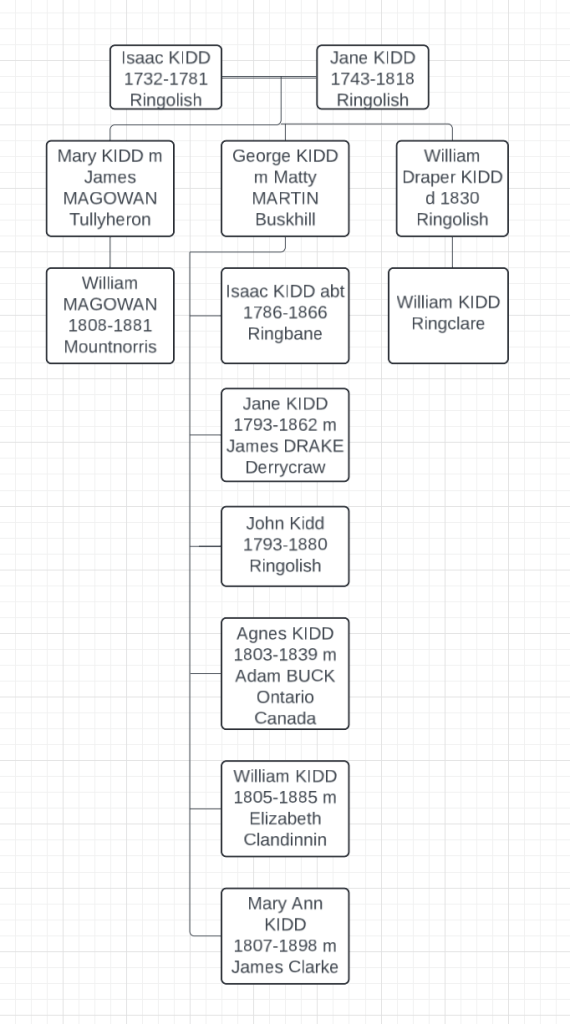
But, before we look at the Registry of Deeds information, here’s a reminder of the Kidd family involved in this convoluted series of legal proceedings and documents. In 1854 the Court of Chancery established that the proceeds of the sale of the farms in dispute would be divided between the descendants of the three children of Isaac and Jane Kidd as detailed left. George had six children so his share should have been divided in six. However Agnes (Nancy) Buck in Canada had died by 1839 and she is not mentioned in subsequent proceedings so her family may have been left out of the settlement. My hypothesis is that my great great grandfather William Kidd of Buskhill was the William, son of George Kidd. Why?

Because I know from his birth record that William was the son of George Kidd of Buskhill.

Because I have DNA matches with descendants of four of the five other children of George Kidd. However, I still have a niggling doubt that I may have jumped to a false conclusion. Nowhere in these documents has William been specifically recorded as William Kidd of Buskhill.

In Which the Kidd’s Long Legal Struggles are Finally Settled
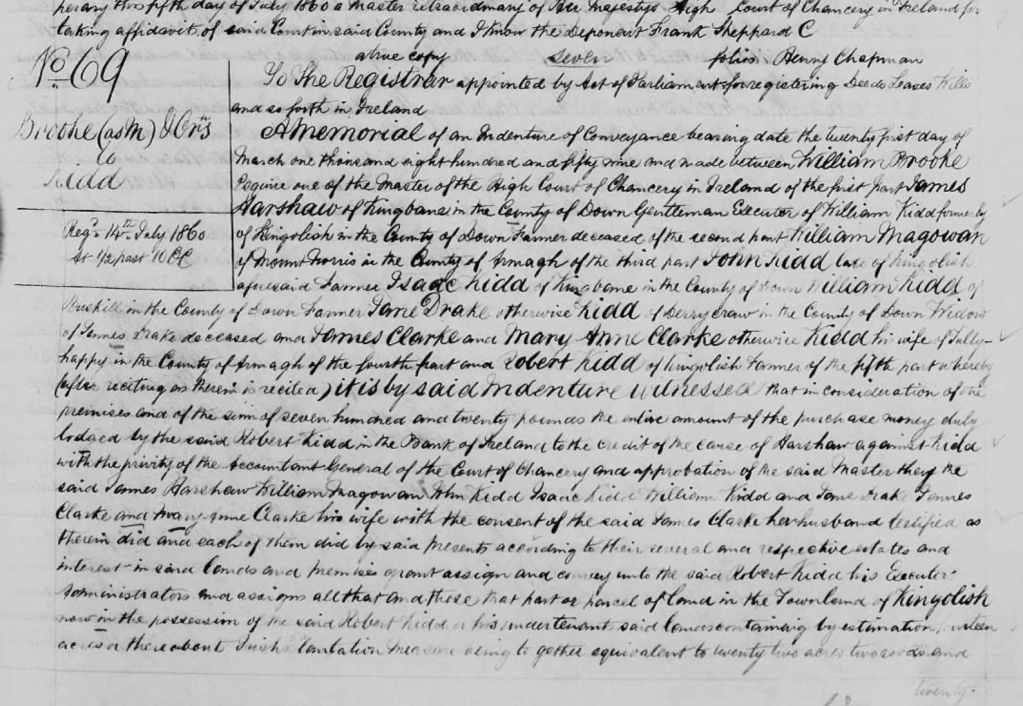
As discussed in my last blog post https://archivedust.org/2024/09/29/examining-the-kidd-inheritance-dispute-through-james-harshaws-diary/ James Harshaw’s diary has been an invaluable resource in finding further information on the Kidd family’s legal disputes. Returning to his writings, I found this entry where he noted that on the 29th  June 1860 he “met with William Magowan and William Kidd in Mr. Todd’s office where we agreed to settle the Kidd’s lawsuit and directed Mr. Todd it be wound up by distribution of the £920 by the sale of the Ringolish farm (occupied by John Kidd) and six and a half acres of the Ringbane Farm (occupied by Isaac Kidd)”. Given the long history of this legal dispute, I wondered if the sale might have been considered important enough to have been recorded in the Registry of Deeds.

The Deed is Done

The point of entry to this transaction, if it was recorded, would be the name of the executor of the will, James Harshaw. And sure enough, there was a deed registered on 16th July 1860 with James Harshaw in his role as executor, in company with William Brooke, one of the Masters of the High Court of Chancery in Ireland, and William McGowan of Mountnorris, Co. Armagh, and with John Kidd late of Ringolish, Isaac Kidd of Ringbane, William Kidd of Buskhill, Jane Drake otherwise Kidd of Derrycraw, and Mary Ann Clarke otherwise Kidd of Tullyhappy, making over the lease of the Ringolish farm to Robert Kidd of Ringolish.

Gleanings

Do we learn anything new from this document? The answer is yes!

Yeah, This is my Ancestor William Kidd!

  • Firstly and most importantly, it proves that the William Kidd involved in all these court proceedings was indeed my ancestor. For the first time William Kidd is specified as being of Buskhill. In 1860, when this sale took place, William Kidd’s daughter, my great grandmother, Agnes Kidd was 30 years old, still living at home, she would surely have been very aware of all the headache and financial difficulties caused by this ongoing dispute. perhaps she and her siblings benefited from the proceeds of the eventual sale.

Whatever Happened to John Kidd?

  • Secondly, the deed says that John Kidd was late of Ringolish. This does not mean he was deceased, but rather that he was no longer living there. Through Isaac Kidd’s will in PRONI, I have been able to show that several of Isaac’s children were living in County Tyrone, while others were still in Donaghmore at the time of his death in 1866. But I have no information on John Kidd’s descendants. This is strange in that, as I also mentioned in a previous post, the same parcel of land in Ringolish occupied by John Kidd in 1854, 22 statute acres and change, that is further mentioned in this deed of 1860, is still occupied by a John Kidd in the 1864 Griffiths valuation.

The Invaluable James Harshaw

  • Harshaw’s Diaries once again provides snippets of relevant information. On 16th November 1861 James Harshaw records that he visited Robert Kidd and his mother. On the 1st December he mentions again that he visited Robert Kidd and on the 7th December he notes that Robert died. On the 9th December he writes that he visited Mrs English Joe Kidd in consequence of the son Robert’s death and on 10th December he records that he attended Robert Kidd’s funeral. I know from others deeds from the 1830s that the English Joe Kidd family lived in Ringolish so there seems a strong possibility that this is the Robert Kidd who bought the disputed farm.

And Where is Draper Kidd’s son William?

  • Thirdly, what happened to the other William Kidd, Draper Kidd’s son in this deed? This William Kidd (of Ringclare) and William Magowan were the ones who met at the lawyer’s office mentioned in James Harshaw’s notes in June 1860. They directed that the estate to the value of £920 be wound up. However, this deed of July 1850 only relates to the Ringolish farm which sold for £ 720. Did Draper Kidd’s son, William Kidd get the value of the Ringbane farm, the other £200?

Final Questions and Opportunities for Further Research

Did occupation of the farm in Ringolish return to John Kidd after Robert Kidd’s death? Is there more information to be found in the Registry of Deeds? Is this a different John Kidd in the Griffiths Valuation of 1864? Will I find a DNA connection to John Kidd? I have new edge pieces to the Kidd puzzle!
Uncategorized

The Kidd Inheritance Dispute in James Harshaw’s Diaries

The first post in this series: https://archivedust.org/2024/08/12/inheritance/

The second post in this series: https://archivedust.org/2024/09/02/inheritance-part-2/

Quick Summary of Findings So Far

What have we learned of the Kidd Family from the will of William Draper Kidd, the family letters, newspaper articles and other documents? (see Family Tree left) I already knew that my ancestor William Kidd 1805-1885 of Buskhill, Donaghmore was the son of George Kidd of Buskhill and his wife Matty Martin. From the various sources I discovered there were two other sons, Isaac and John, and three daughters, Jane Kidd Drake, Agnes (Nancy) Kidd Buck and Mary Ann Kidd Clarke. George Kidd’s parents were Isaac and Jane Kidd. His brother William Draper Kidd, whose will is preserved at the Public Records Office of Northern Ireland (PRONI), seemed to have inherited and held the leases of the family farms, even though his nephews, John and Isaac Kidd were tenants in two of them. Draper left all the land in his will to his son William Kidd and disinherited his nephews Isaac, John and William. Much litigation followed over the space of 24 years with the executor, James Harshaw, ignoring some of the provisions of Draper Kidd’s will and seeking the division of the property between the the descendants of Isaac and Jane Kidd’s three children, William Draper Kidd, George Kidd and Mary McGowan. Finally in 1854 the case was settled and Isaac and John Kidd were required to sell their land and share the proceeds between their siblings and cousins.

Discovering James Harshaw’s Diaries

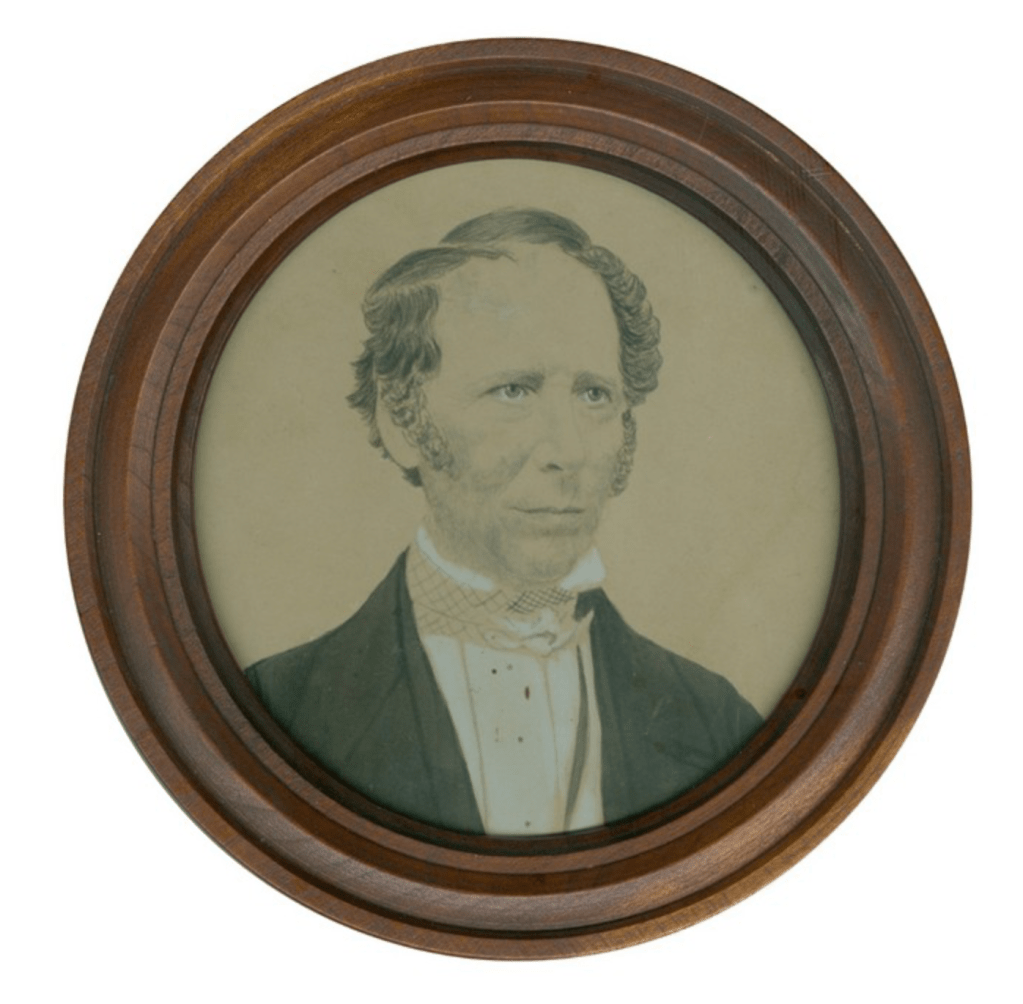
Left: Portrait of James Harshaw 1796-1867 donated to the Newry Museum by Marjorie Harshaw Robie in 2023

I mentioned in the first installment of Inheritance https://archivedust.org/2024/08/12/inheritance that William Draper Kidd’s will of 1824 survived because it was included in the diaries of James Harshaw of Ringbane, Donaghmore, Co Down . These diaries detail the workings of James’ farm, the activities of his family, the many wills he writes for his neighbouring farmers, and births marriages and deaths among his friends, family and acquaintances. The diaries went to America with one of James’s sons in the 1890s and were rediscovered in a bank vault in Ohio in the 1990s, eventually making their way into the hands of a descendant, Marjorie Harshaw Robie. Marjorie recognized their importance and donated them to the Public Records Office of Northern Ireland (PRONI). She also made a transcription which I recently discovered was available on Family Search. https://www.familysearch.org/library/books/records/item/46467-james-harshaw-s-diaries As so often we benefit from the work of others. I am always grateful for those that have created indexes, documents, pieces of research that aid us in our own journey of discovery. Here is a link to a Facebook post written by Suzanne Ballard, Marjorie Harshaw Robie’s cousin, on the Old Newry page that details the survival of the diaries. https://www.facebook.com/groups/1460077644050274/posts/5190135004377834/

Compulsive Reading

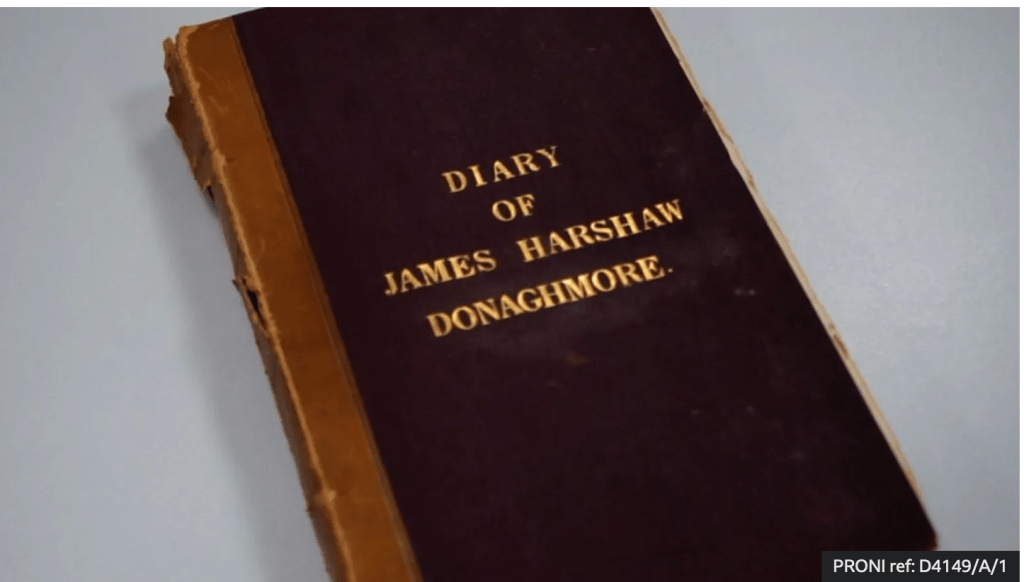
left: The PRONI copy of James Harshaw’s diaries with their PRONI reference (downloaded from a BBC article)

I admit that a 19th century diary is not everyone’s idea of a page turner, but I was completely immersed. It was familiar yet provided valuable new information; I found myself reading every page. I recognized the way of life, the rhythm of the farm work, the trips to the fairs and markets, the noting of the neighbors’ comings and going. In its pages I heard the echo of the stories my father, Bertie McCracken, told of his growing up, almost a century later, in the 1920s and 1930s in a County Down farming community.

Kidds Galore

There is so much material in this diary. With the restraints of a blogpost I can only dip into and reflect on the new information. But there is more, so much more detail. There are constant references in the diaries to Kidds:

  • sometimes including a Christian name, Hurrah!
  • sometimes Mr, Mrs or Miss Kidd.
  • very occasionally, but helpfully, giving a name in connection with a townland.
  • James Harshaw’s wife was Sarah Kidd, the daughter of William Kidd of Kiddstown, Ringolish, Donaghmore, so some of the Kidds referred to will be her family and she may well have been related to Draper Kidd in some way.
  • Bear in mind, there were many Kidd families in the parish of Donaghmore. How all these people interlock with each other is by no means clear.

Genealogical Gold

Undoubtedly the most important information for me in the diary was in James Harshaw’s 1849 farm accounts where he gives an extract from the book of Wm Kidd (Draper). This outlines the dates of death and ages of Draper’s parents, Isaac and Jane Kidd (see below). This is treasure indeed. One family tree I was sent claimed that James Harshaw was Draper Kidd’s brother in law. However, this extract shows that Isaac and Jane could not have been the parents of Sarah Kidd as Isaac was dead almost 20 years before she was born. Draper Kidd’s book may not have survived but this valuable family history has.

Notes of an Executor

James Harshaw records his days without judgement. At times of family difficulties and tragedy he is lyrical. Often when he records a death he mentions something good about the character of the deceased. I would have expected some exasperation from him in the ongoing dispute with the Kidds but his entries are factual. Indeed he appears to continue to conduct farm business with Isaac Kidd. What becomes clear quite quickly is that James is close friends with the other two legatees, Draper Kidd’s son, William Kidd and Mary Magowan’s son, William Magowan. They visit often in each others houses and go to fair days together.

Referencing the Dispute

  • 1845 The first mention of the litigation in the diaries does not come until 6th November 1845 when James writes that Isaac and John Kidd were served with notice from William Kidd and William Magowan. This is puzzling as in the court documents, that we saw in the newspaper reports, William McGowan is listed as one of the defendants in the case. Was this a different court case?
  • 1846-1848 Through 1846 and 1847 there are references to bills being served and answers being filed. In February 1848 ‘John and William Kidd read papers to Mr and Mrs Drake.’ It feels like there is an uneasy, shifting set of alliances going on with various family members litigating against each other at different times. By no means all of these bills and filings made the newspapers. Linking these disparate references together is difficult.
  • Then, a shocking note on 28th September 1848 says ‘John and Isaac Kidd arrested for Mr Kidd by Vanard’ and 29th September 1848 ‘John and Isaac Kidd sent to Downpatrick.’ The County Gaol was in Downpatrick so this appears to be what is meant. Family relations had reached a new low! However, as John and Isaac keep on farming and going about their business they can’t have stayed long in the County Gaol.
  • 1848 This is included in James’ 1848 accounts as follows: ‘Ringclare 1848. To Mr James Harshaw.I request you will proceed with this suit and enforce my just claims for a division of the lands at present held by Defendants, John and Isaac Kidd, according to my father’s will, and as executor, and I hereby indemnify you against all costs incurred by you, as such executor, or to be incurred in carrying on this suit. William Kidd.’ Does this show that William Kidd was frustrated with the lack of progress in the case? I would have been if it was my inheritance!
  • 1849-1854 Through 1849 and 1850 the reflections on the case continue. In July 1849 James notes that the Kidds case appeared in the (Newry) Telegraph. During these years witnesses are examined by both sides at solicitors in Newry. In Feb 1852 James Drake’s death is noted and in December 1852 the diary states that Mrs Drake obtained a verdict against John Kidd. A few references are made in 1853 about visits to Dublin re the Kidd case and then in September of 1854 James writes that he attended the auction of the Kidd’s farms in the Four Mile House.

Postscript

If James Harshaw thought that all difficulties with the Kidds were over with the sale of the farms, he was wrong. On 20th July 1855, he records ‘William Kidd of Ringclare (Draper’s son) breakfasted here this morning , after which he proceeded to serve a 10 day notice on William Kidd of Ringbane and Robert Kidd of Ringolish to pay out the purchase of their farms.’ So William Kidd had gone from one set of Kidds, John and Isaac, to another set of Kidds, William and Robert, owing him money! William Kidd of Ringbane is probably Isaac’s son who will go on to inherit Isaac’s farm in 1866, he seems to have already been managing the property in 1855, although Isaac’s name is still listed as the tenant in the Griffiths Valuation of 1864. I do not know who Robert Kidd is, but there may be other helpful clues in the pages of the diary.

Conclusion

Finally, on 29th June 1860 James Harshaw writes ‘met William Magowan and William Kidd in Mr Todd’s Office where we agreed to settle the Kidd’s lawsuit and directed Mr Todd it be would up by distribution of the £920 by the sale of the Ringolish farm and six and a half acres of the Ringbane farm.’

Was the distribution only to William Magowan and William Kidd, or did it include the children of George Kidd? We cannot tell at this distance, but the details found on this court case go beyond anything to be expected in 19th century Ireland. This insight into the life and times of the Kidd family of Donaghmore helps us envisage a cultural environment both familiar and alien to us. We come a step closer to understanding the lives of our ancestors.

Uncategorized

Inheritance Part 2

Court of Chancery in Dublin: The Kidd Family Inheritance Dispute

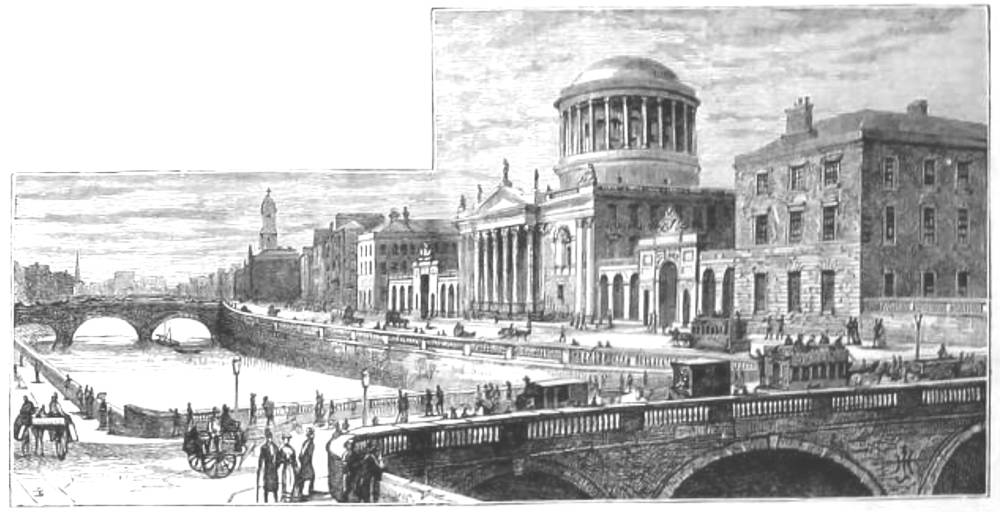
A sketch of the Four Courts in the Dublin where the Court of Chancery sat. How intimidating would this have been for country farmers?

Quick Summary of the Inheritance Story So Far

In researching my great great grandfather William Kidd of Buskhill, Donaghmore, County Down 1805-1885 I came across the 1824 will of William “Draper” Kidd of Ringolish, Donaghmore, County Down. Two younger William Kidds, a son and a nephew, are mentioned in the will but it is not clear if either of these are my ancestor.

New clues turned up when my father, Bertie (Hugh) McCracken, William Kidd of Buskhill’s great grandson, did an autosomal DNA test on Family Tree DNA (FTDNA) in 2017. A distant DNA cousin, Gary Clements, had correspondence from the 1820s and 1830s between Kidd family members in Donoughmore and Agnes (Nancy), mentioned in the will, who lived in Canada. Her brother William Kidd, is referenced in the letters and it seems likely that he, given the DNA connection, was my ancestor. The letters give details of a court case that arose from the terms of the will.

Lucky Source No 3: What the Newspapers Said

When there’s a will and a court case, then the papers take an interest. Some things don’t change! Is there any further information to be gained about the Kidd family from these newspaper accounts? Fortunately many newspapers are now searchable online at https://www.britishnewspaperarchive.co.uk including several from County Down. Let’s take a look at what they say.

Newry Telegraph 5th November 1830

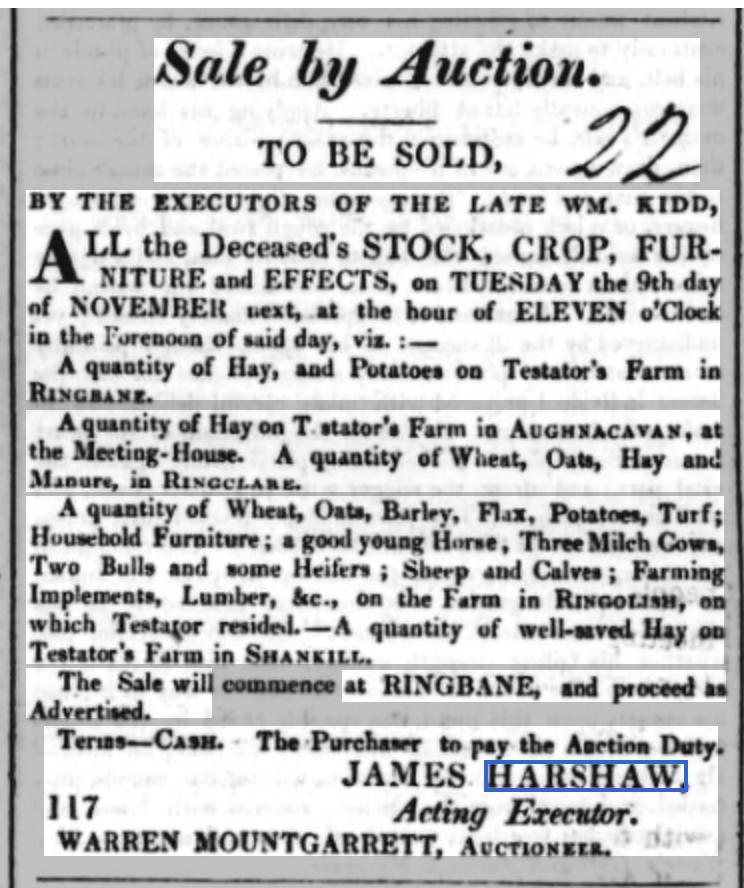
Sale By Auction

We know from the family letters that Draper Kidd died in October 1830. Soon afterwards James Harshaw, as the acting executor, advertises an auction for the crops, animals, implements etc. at the various farms owned by William Draper Kidd, Ringbane, Aughnacavan, Ringclare, Shankill and the farm where Draper had resided in Ringolish. Draper was evidently a prosperous farmer who either owned or leased land in five different townlands.

The family letters show that there are already legal proceedings going on soon after the death of Draper in 1830 but there is no mention of the court case in the newspapers until 1849. 

Newry Telegraph 11th July 1849

Bill in Chancery

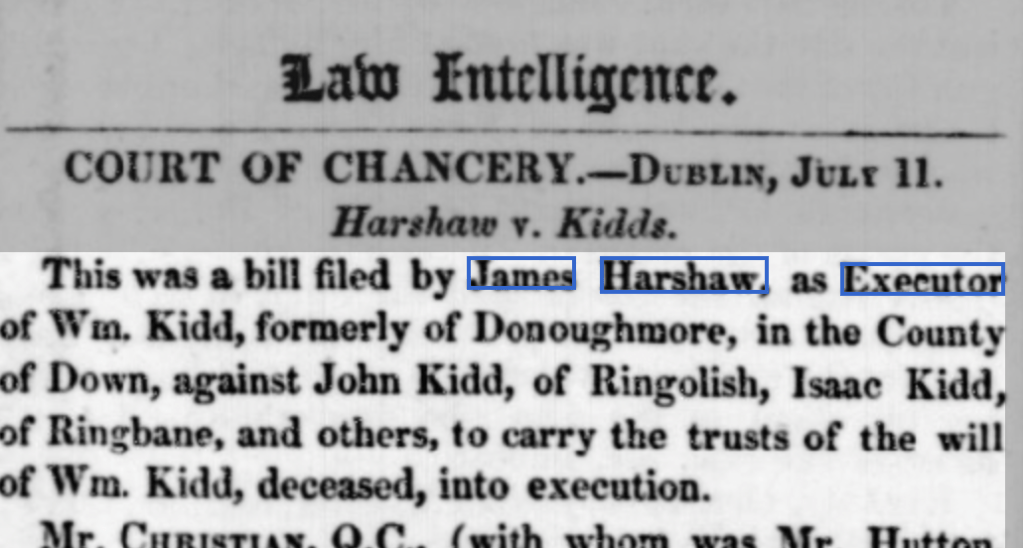
The bill that came before the Court of Chancery in Dublin shows James Harshaw as executor of William Kidd formerly of Donoughmore, as plaintiff, and John Kidd of Ringolish and Isaac Kidd of Ringbane, and others as defendants. 

The language is long and complicated, but the gist of the complaint is that shortly after the death of William Draper Kidd, John and Isaac Kidd forcibly took possession of the two farms, about 40 statute acres, valued at £1600, and have remained in them ever since. This, despite repeated applications from James Harshaw that they should divide the land amongst the three parties legally entitled to it. The original leases of the land dating to 1753 and 1796 respectively had been in the name of Isaac and Jane Kidd.

Division of property

It seems that the three parties legally entitled to the land are three of the children of Isaac and Jane Kidd the original lessees, or their descendants:

  • Their eldest son William Draper Kidd who left all his land to his son William Kidd, 
  • Daughter Mary Magowan and her son and heir William Magowan,
  • The six children of their second son, George Kidd, Isaac Kidd, John Kidd, William Kidd , Jane (Kidd) Drake, Nancy (Kidd) Buck and Mary Ann (Kidd) Clark.

Lord Chancellor’s Ruling

The Lord Chancellor ruled for the executor of the will, James Harshaw. John and Isaac Kidd must vacate the properties. The exception to this ruling is 4 acres of Isaac Kidd’s farm in Ringbane which were made over to him by his grandmother, Jane Kidd, and so excluded from the settlement.

Notice here that James Harshaw has shifted position from the original requirements of Draper’s will in which nothing was to be left to George Kidd’s sons, William Magowan was to get £100 and all the land was to go to Draper’s son, William Kidd.  Now the property was to be divided threefold.

Newry Telegraph 15 December 1849

Decree in Chancery

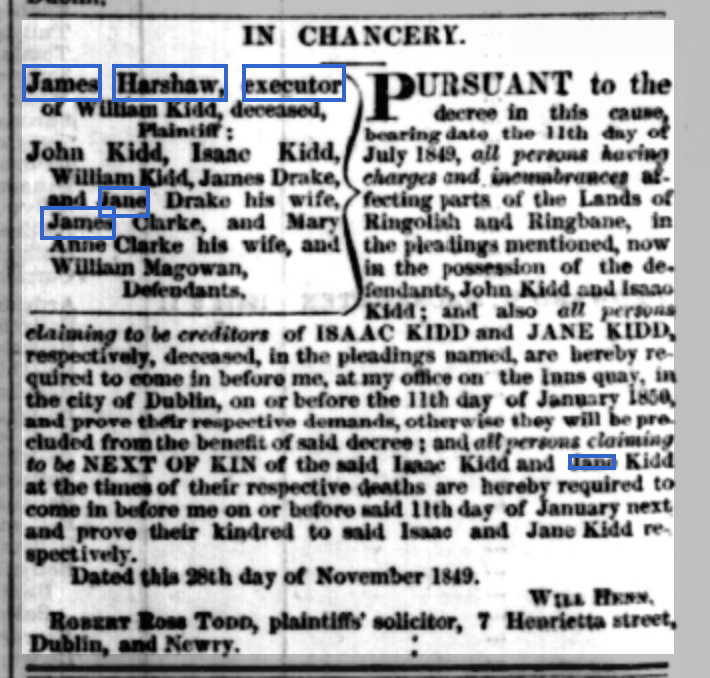
A notice was placed in the Newry Telegraph about the court case, this time naming all the defendants as John Kidd, Isaac Kidd, William Kidd, James and Jane Drake his wife, James Clarke and Mary Ann Clarke, his wife and William Magowan. It required anyone with claims affecting parts of the lands of Ringolish and Ringbane, in the possession of John and Isaac Kidd, and also all persons claiming to be creditors of, or next of kin to, Isaac and Jane Kidd, deceased to come in to the solicitors in Newry or Dublin to prove their claim before the 11th of January 1850.

List of Defendants

Helpfully, this time the entire list of the defendants names is given. It includes the three Kidd brothers and two of their sisters, Jane Drake and Mary Ann Clarke. The third sister Agnes (Nancy) Buck is not mentioned. A tree on Ancestry.com for the Buck family shows that Nancy died in 1839 so this may be why she is not included, but what of her children? Did her family ever get the money she was left in Draper’s will? And again, what of the other William Kidd, Draper’s supposed illegitimate son? 

Whether or not the defendants did register their claims, nothing is reported of the Kidds and their litigious activities until 18 months later.

Newry Examiner and Louth Advertiser 23rd August 1851

The Drakes go to Court

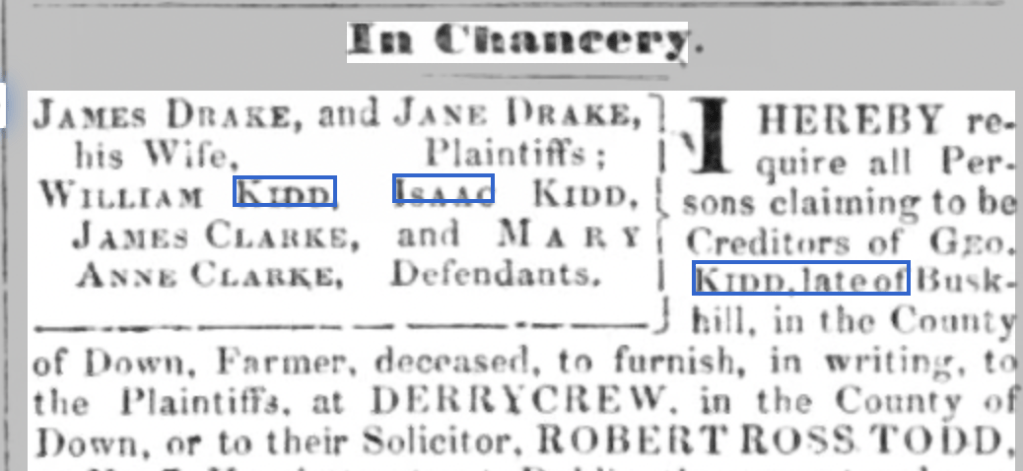
This time it is James and Jane Drake who have a case in Chancery against Jane’s brothers, William and Isaac and sister and brother-in-law, Mary Ann and James Clarke. Apparently it is now the settlement of their father’s estate which is at issue. The notice requires all those that are creditors of George Kidd, late of Buskhill in the County of Down, farmer, deceased to provide in writing to the plaintiffs their respective demands. Interestingly the Drakes use the same solicitor, Robert Ross Todd, who has taken then to court over Draper’s will!

George Kidd of Buskhill probably died before 1824, as he is not mentioned in Draper’s will or in the letters written to Nancy in Canada. Is it odd that it has taken so long to settle his estate? Or was this quite normal in rural Ireland? 

Newry Examiner and Louth Advertiser 9th August 1854

Auction of the Kidd Farms Scheduled

And at last, The Harshaw v Kidd cases draw to a close. “Pursuant to a decree made in this case bearing date 29th April 1853 the lands of Ringbane in possession of Isaac Kidd, 10acres, 2 roods, 30 perches Irish Plantation measure and the lands in Ringolish now occupied by John Kidd containing 14 acres Irish Plantation measure are to be sold at auction at the Four Mile House (an inn) in Donaghmore on 26thSeptember 1854.” This decree is effectively enforcing the ruling of 1849 in favor of James Harshaw. Twenty Four years after Draper Kidd’s death his affairs can finally be settled.

Newry Telegraph 5th October 1854

The Land is Sold

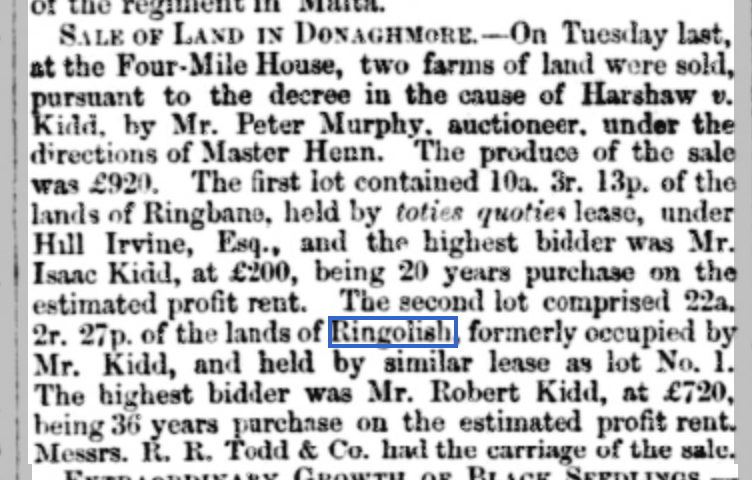
The newspaper reports the sale of the lands of Ringbane and Ringolish that have caused so much trouble for a quarter of a century. Strangely the acreage of the land is not the same as in the decree from Chancery. The difference in John Kidd’s land in Ringolish can be explained by the use of two different methods of measurement. The court degree refers to what was known as Irish Plantation measure, while the sale report refers to the same acreage in Statute Acres. Nevertheless, that does not explain the difference in Isaac Kidd’s farm which is only a few perches. Isaac Kidd appears to have bought back his own land and a Mr Robert Kidd bought John Kidd’s land. Possibly he was Isaac’s son. Whoever bought the farms, 10 years later at the time of the Griffiths Valuation of Ireland, Isaac Kidd is still occupying 17 acres in Ringbane and John Kidd is still occupying 10 acres and change in Ringolish.

Conclusions

So what conclusions about the Kidd family can we make as a result of these newspaper reports?

  • Draper Kidd’s brother was named George Kidd and was the father of Isaac, John and William Kidd, Jane Drake, Nancy Buck and Mary Ann Clark. Jane and James Drake seem to have been the executors of George Kidd’s estate and many years after his death took their siblings to court to finish the settlement.
  • George and Draper’s parents were Isaac Kidd and Jane Kidd. They also had a daughter Mary Magowan. Their affairs seem to not have been well settled with Draper inheriting all the family leases even though George, possibly, and his sons Isaac and John, certainly, farmed two of the leases.
  • My It would appear that my ancestor William Kidd, the youngest son of George, inherited the Buskhill farm from his father, while the older sons Isaac and John inherited property from their grandparents.
  • Jane and Isaac Kidd, my 4 times great grandparents, are new names to add to the Family tree, taking it back into the middle of the 18th century.

Surprisingly, as I was writing this story, yet another source turned up to fill in some of the gaps. Do you remember that Draper Kidd’s will survived because James Harshaw had kept a copy of it in his diary? I knew that the diary was held by the Public Records Office of Northern Ireland (PRONI), but I have only recently discovered that there is a transcription of it on the FamilySearch website at: https://www.familysearch.org/library/books/records/item/46467-james-harshaw-s-diaries. So my homework is to read through and learn of James Harshaw’s perspective on this seemingly endless court case. I hear the diary is very long!

Keep you eyes open for Inheritance Part 3

Uncategorized

Inheritance

Unravelling Forgotten Family Stories- A tale of Inheritance from 19th Century Ireland

Irish Genealogy can be very frustrating. Have I mentioned that before? if I haven’t I’ll need to keep repeating it again and again! A combination of circumstances; lack of original record keeping, poor decision making, and the destruction of the Public Records Office in Dublin in 1922 which consumed centuries of wills, court documents, Church of Ireland records and many other treasures, mean that records relied on for tracing family trees in other countries, do not exist in Ireland. Fortunately, in recent years tracing your Irish ancestry in the 19th and early 20th centuries has become much more accessible with the  surviving 1901 and 1911 census returns online at www.census.nationalarchives.ie and births, marriages and deaths from mid 1800s onwards at www.irishgenealogy.ie. And, what’s even better, both of these sources are free.

But , to go further back in time, we need to hunt for alternative sources and with a bit of luck, and I mean luck, sometimes it is possible to piece together a family story from disparate documents and online repositories.

This is the convoluted story of one such piece of research from my own family.

Lucky survival Number One: Where There’s a Will

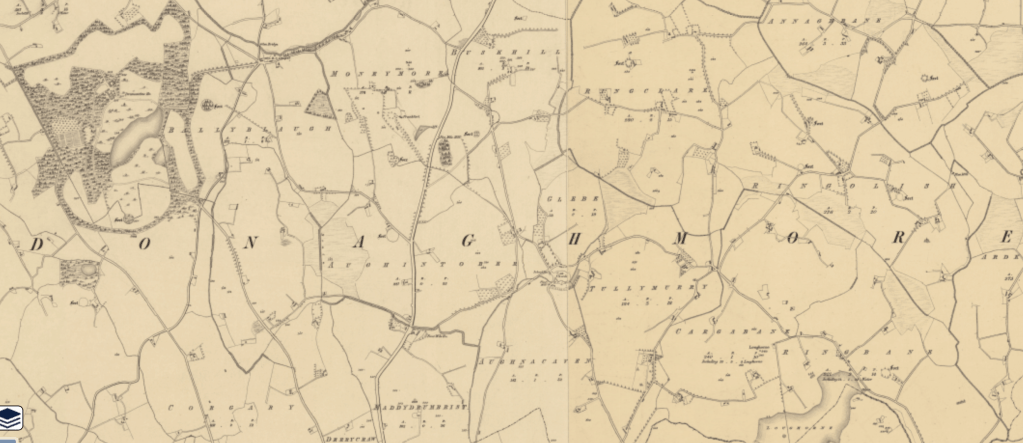
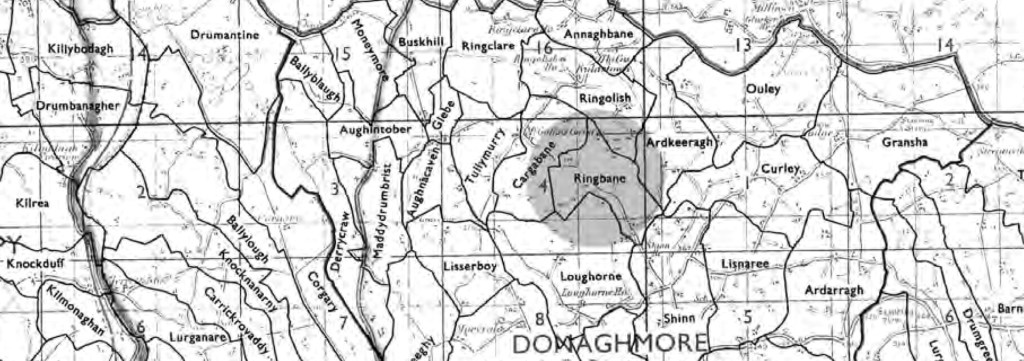
In May of 1824 William Kidd, known as Draper Kidd, of Ringolish, Parish of Donaghmore, Co Down,(you can see it faintly in the header map) wrote his last will and testament. The document rambles a bit, but essentially Draper provides for the six children of his brother. The sons, Isaac Kidd, John Kidd and William Kidd, are to inherit land, and the daughters, Jane (later Jane Drake), Agnes (later mentioned as Nancy , a common pet name for Agnes at this time. Her first husband named Dick and second Buck) and Mary Ann (later Mary Ann Clark) are to receive money. He also leaves £100 to his sister Mary Magowan’s son William Magowan.

Draper, I will call him Draper as there are too many Williams in this story, grudgingly provides up to £50 for his own son, John Kidd, appearing to deny that he married John’s mother, saying bluntly, “respecting that woman in County Armagh that people say I married that she call Grimes”.  He also leaves all his land to another son, William Kidd, when he reaches the age of 21.

At some point Draper writes a codicil to his will, “For bad conduct of my brother’s sons I now revoke their parts of lands in this will and not allow them any part thereof. I mean Isaac and John and William. Three brothers nor any chattels but what their father and them got from my mother and me already.” Clearly he was not happy with his Kidd nephews.

Given all the proverbial headwinds and hurricanes in the preservation of Irish records, how did this will survive? Why didn’t this document fly in incinerated fragments across the streets of Dublin in 1922? The answer lies with James Harshaw, a farmer and prominent citizen in the townland of Ringbane, the neighbouring townland to Ringolish, in the parish of Donaghmore, who kept a detailed diary over many years. James was the executor of Draper’s will and kept a copy of it in his diary. Both diary and will are now held at the Public Records Office of Northern Ireland (PRONI). 

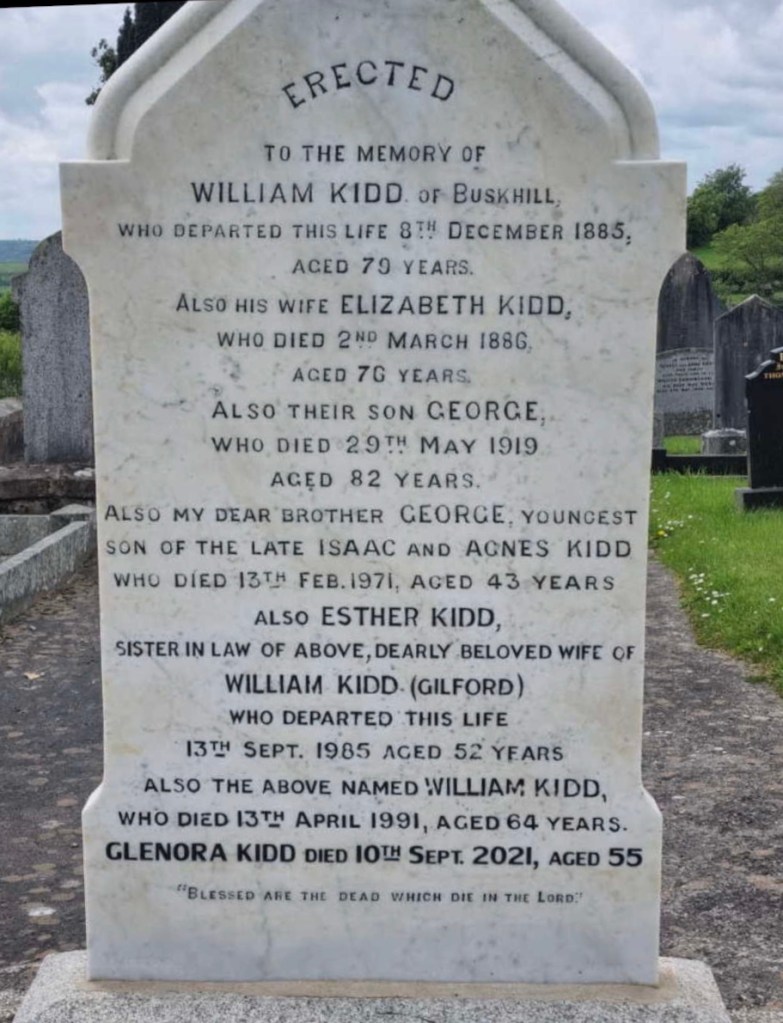
I first saw the copy of the will many years ago at PRONI, when I was looking for records of my own great-great grandfather, William Kidd 1805-1885, a farmer of Buskhill, Parish of Donaghmore, whose gravestone in the Donaghmore Church of Ireland graveyard shows that he died in 1885 aged 79 (see left). I had no idea if either of the younger William Kidds mentioned in the will had any connection to ‘my William’. The will remained a tantalizing clue but, for a long time, it was nothing more.

Lucky Survival Number 2:  Family News (with a little help from DNA)

In 2017 I had my father, Bertie (Hugh) McCracken, do an Autosomal DNA test with Family Tree DNA. Shortly afterwards I was contacted by a 27cM match (many possibilities of relationship, but about 3rd to 4th cousin), Gary Clements. Gary thought he knew how he and Bertie were connected. He was descended from Mary Ann Kidd, the niece of Draper Kidd, who is mentioned in the infamous will. Gary Clements’ family information showed that Bertie’s great grandfather, my great great grandfather, William Kidd 1805-1885 was Mary Ann’s brother. And what’s more Gary had six letters from the 1820s to 1830s to prove it. You can imagine my excitement on hearing about this.

Gary sent me transcript copies of the letters, but he did not specify their origin, only that a lady named Audrey, a descendant of another of the sisters, Agnes (Nancy) Kidd Buck, had sent them to him and that he forwarded them with her permission. Sadly, I never heard anything further from Gary, but I am grateful that he significantly helped my research.

What a privilege it was to read this correspondence, to understand more of the lives of the Kidd family in the early 19thcentury and to learn of the heartache caused by Draper Kidd’s will.

The letters were written to Nancy (Agnes) Kidd in Kingston, Ontario from 1828 through 1833 from her sister and brother-in-law, Jane Drake (nee Kidd) and James Drake in Derrycraw, Donaghmore and her brother John Kidd in Ringolish, Donaghmore. Initially they are mainly concerned with Nancy’s welfare as they hadn’t heard from her, then even more concerned as it turned out her husband, Robert Dick, and their two children had died of cholera. Plans were made to book her a passage home, but this never happened as Nancy remarried to Adam Buck and remained in Canada. 

Then Uncle Draper Kidd died in 1830.  Jane Drake outlines the will to Nancy (Kidd) Buck and describes the problems that the Kidd brothers are having with the executor of the will, James Harshaw.

It appears that Draper Kidd must have held the lease on two farms which had previously been occupied by his mother (at this point her name was unknown) and were now occupied by Nancy’s brothers, John and Isaac. 

When John Kidd writes to Nancy again in 1831, he says. “I cannot tell you all the trouble I have had since Uncle Draper Kidd died. He had a will giving all his landed property to his Bastard son. We do not like that our father’s property should be given to a Bastard. I was Administrator to Grandfather and mother’s property. Isaac was in one. I took possession of the mention (? Perhaps should be mansion) house and farm, and now most of it is in crop. Uncle Draper intended to alter his will, but the Lord took him suddenly, after 24 hours sickness.

James Harshaw and John Young are executors. The landlord Mr. Vaughan wants to give grandmother’s house to his son and give me a farm on Draper’s land instead. We have been able to hold possession so far.”

There is a hint in one of the earlier letters, before Draper died, from John Kidd that there were previous property issues. He says “the property we have has been a great expense, but we have not got any settlement yet. You shall have an equal share when we get it.” Was he referring to his dispute with the landlord Vaughan, which may have been going on before Draper’s death, or was this something to do with an earlier will?

In 1832 Jane Drake writes to Nancy (Kidd) Buck that “Your brothers have been at law with the Executor James Harshaw and the Landlord Mr. Vaughin ever since, about the property that my father should have had many years ago. Our Brothers have the best side of the law as yet, but the case is not ended. They have the land still in possession. The case is to be tried in the Lord Chancellor’s Court in Dublin.” 

Jane Drake further says that she and her sisters will not receive the money bequeathed to them until the court case is settled.

In 1833 John Kidd sends Nancy( Kidd) Buck details of the court case and the back and forth of the legal proceedings.  And here the letters end.

Of course I have questions. 

Did Nancy (Kidd) Buck keep the letters because of the court case? Was this proof that she was due an inheritance?

There is only one brief mention of a William in the letters, in 1831 John Kidd states that “William and I will go to your country next Spring as I hope we will have the case settled by this time”. as we know from later letters the case wasn’t settled and there is no evidence that William Kidd or John Kidd went to Canada. But is this William really “my William”? Other evidence suggests that he is. My father, Bertie, has DNA matches to descendants of Jane (Kidd) Drake, to Gary Clements who is a descendant of Mary Ann (Kidd Clark) and her husband James Clark, to the Buck family, descendants of Nancy (Kidd) Buck in Canada and also to descendants of Isaac Kidd of Ringolish.

“My William’s” birth is recorded in the register of Donaghmore Presbyterian Church in 1805 as the son of George Kidd and Matty (short form of Martha) Martin of Buskhill.

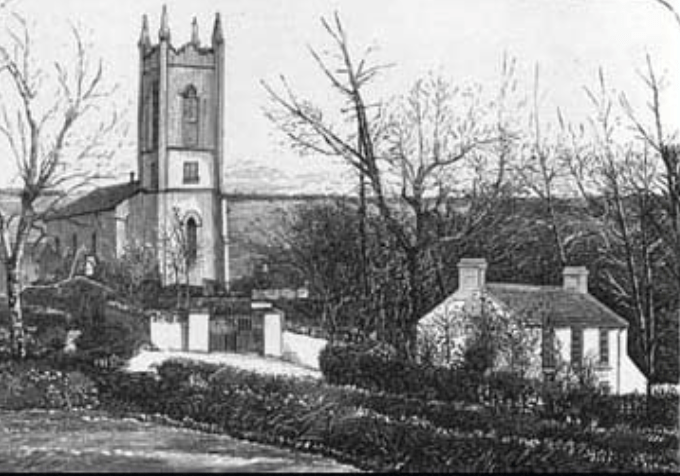
Another chid of George and Martha Kidd of Buskhill is recorded in the Donaghmore Church of Ireland (pictured left) register, Agnes baptized in 1803, probably the Agnes (Nancy) who is the recipient of the letters in Ontario.

But of course, as with so many genealogy clues, there are more questions than answers. It’s not clear why the children would be baptized in different churches. There are older records for the Church of Ireland church but no mention of other children from this family. The surviving Presbyterian records don’t start until 1804. Was there more than one couple named George and Martha Kidd in Buskhill? There are no census or other records to help us with this.

I’ll finish here for now with these questions floating in the air, grateful that I now know more about this family than I do about 90% of my ancestors. But the story does not end here, amazingly other records turned up that shed further light on this tale of disputed inheritance and they deserve their own post. Watch out for Inheritance Part 2.

Smith Family

Witness to (Ancient) History

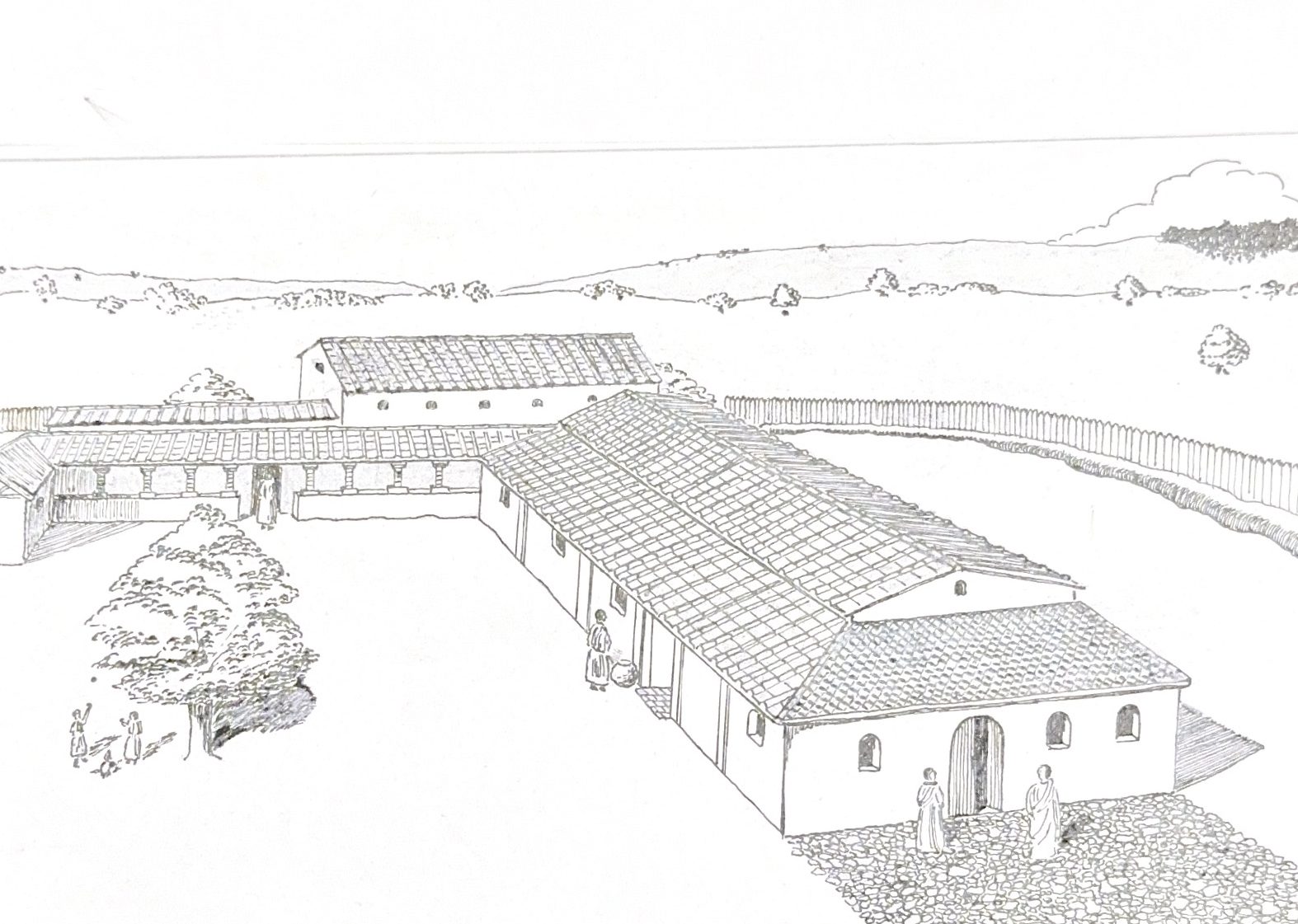
A sketch of the Roman Villa excavated at Potter Hill, Norton Disney, Lincolnshire

In an attempt to get me started on writing this blog, I have signed up to the Amy Johnson Crow 52 Ancestors 2024 prompts. I’ve still managed to miss the first 3 weeks of 2024, but here, finally, I have some inspiration. This is the story of how my husband Malcolm’s grandfather and great-grandfather were directly involved in uncovering ancient history and creating a little bit of history of their own in the process.

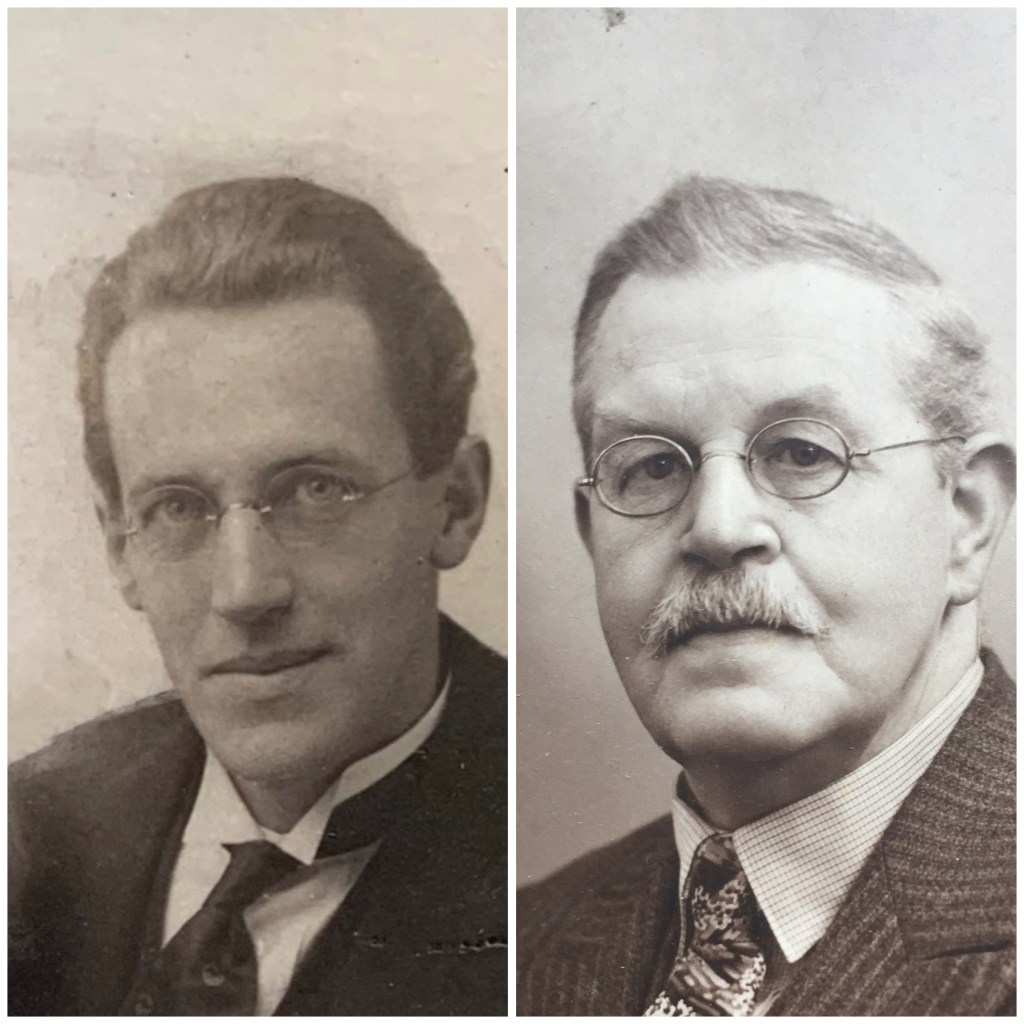
Arthur Smith junior, Malcolm’s grandfather, was for 41 years (1919-1960) the curator and librarian at the Gilstrap Museum and Library in Newark-on-Trent, Nottinghamshire. He was the son of Arthur Smith senior, who was the curator of the Lincoln City and County Museum, Lincolnshire from 1900-1934. The two men, father and son, were alike in many ways, including similar interests in historical research and archaeology and no doubt, their museums being only 20 miles distant from each other, they often had reason to collaborate.

Above left: Arthur Smith 1893-1979 Above right: Arthur Smith 1869-1949

One of the family stories about the two Arthurs was that they had jointly excavated a Roman villa on the Lincolnshire/ Nottinghamshire borders. 

We had no details on the excavation but after a recent conversation, I did a google search for “Roman Villa, Nottinghamshire” which brought up a 30 minute talk on the Collingham and District Local History website, by Richard Parker, on the Potter Hill Roman Villa at Norton Disney https://www.youtube.com/watch?v=vCsrSOd0YZg. Richard, a local historian, has thoroughly researched the excavation of the villa and other archaeology that lies in the surrounding area. The field where the villa lies has been threatened by development and, as a result of Richard’s work, the entire site, not just the villa, has been scheduled by Historic England. This means it is considered nationally important.

While I expected that there might be some mention of the two Arthurs, imagine my surprise when 5 minutes into the talk, Richard went into detail on the discovery of the villa, how in 1933 a farmer by the name of Fred Taylor had walked into the Lincoln Museum to find Arthur Smith senior and produced a handful of tesserae from his pocket.

“Where on earth did you get those?” was Arthur Smith’s astonished question. Arthur senior then got onto his pushbike and pedalled down the Fosse Way to Potter Hill, where he found an archaeological treasure. He enlisted his son, Arthur junior’s help and within a few weeks they had excavated a Roman pavement. This was big news at the time and gained widespread attention, but the excavation site was kept secret.

From here onwards, the plot thickens. Arthur Smith senior, possibly because he was approaching retirement, or, because the responsibility for the site was in Newark rather than in Lincoln’s purview, handed oversight of the dig to Arthur junior. The archaeological establishment did not appreciate this move as Arthur junior had no previous excavation experience. 

Richard Parker tells us that there is an extensive file at the National Archives on the case with letters from other archaeologists to the Inspector of Ancient Monuments objecting to Arthur junior taking over the site, one even going so far as to say he was sending out spies to discover the location. There is a letter from Arthur junior himself saying that he will fight to the last drop of blood to retain control of the dig.

The Inspector of Ancient Monuments scheduled the villa site in May of 1934. The Office of Works appointed an academically qualified archaeologist, Adrian Oswald, who worked in conjunction with Newark Museum.

Anyone who has seen the film “The Dig” may be experiencing déjà vu at this point!

In the end there were two seasons of digging in 1934 and 1935. A Roman villa, more akin to a large country farmhouse than a palace, was uncovered together with many artifacts. 

I sent an email to Richard Parker telling him how excited we were to hear the story of the excavation. He sent me a link to slides of the dig from the 1930s.

Among family papers we have a lovely old wooden box with Arthur Smith’s name on it. A search through it uncovered the text of a slide talk on the dig that Arthur had given at various points between 1937 and 1969. It turns out that this matched Richard’s slides; we had two pieces of the same puzzle. Richard was able to marry the text and slides together and gain further insight into the excavation.

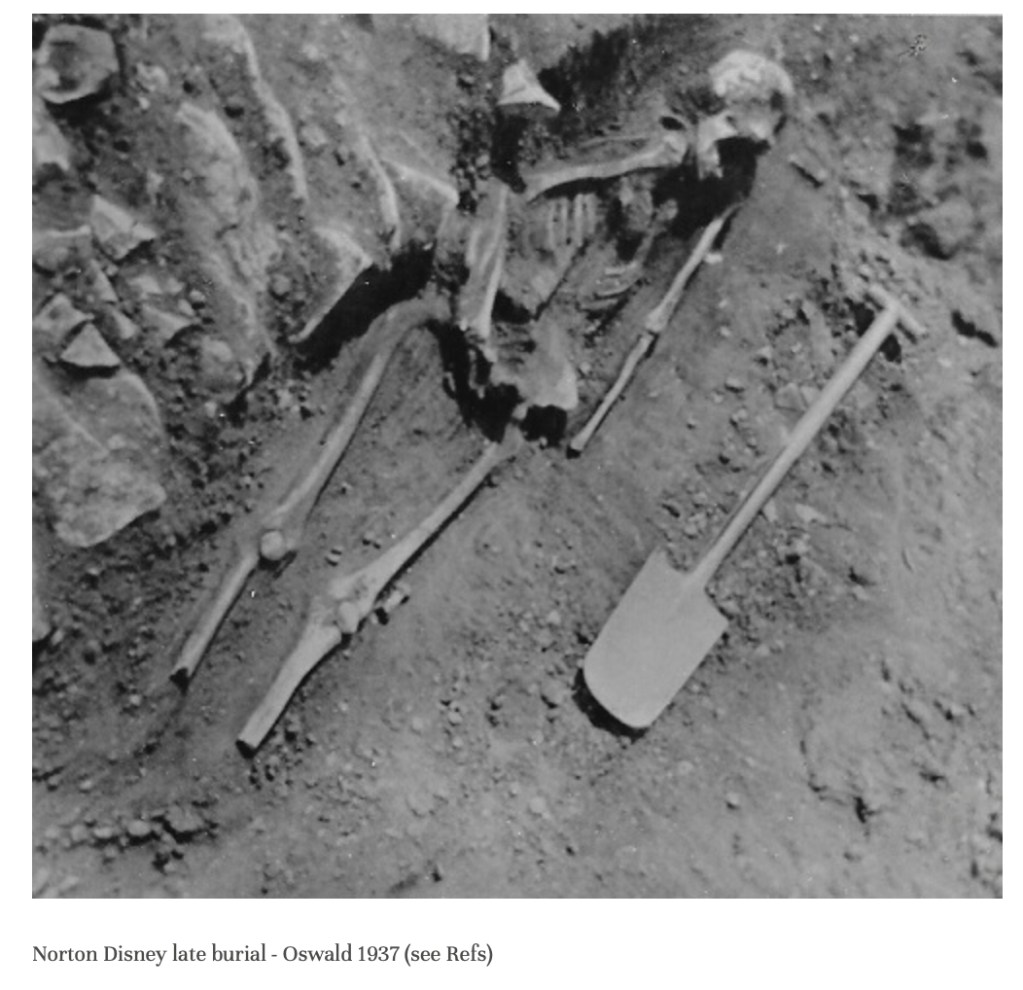
One of these slides was of a skeleton without feet. The appointed archaeologist had hired the road diggers and their machinery from Newark Corporation to help at the site. There was speculation that this heavy machinery was the reason for the skeleton’s missing feet. Arthur Smith junior was the most meticulous of men; a family story goes that he trimmed the edges of his lawn with nail scissors. He would not have been amused by rough and ready digging!

There is so much more to the story of Norton Disney Roman Villa. It is still being added to as small digs have restarted in recent years. In the 2023 season a Roman dodecahedron was uncovered and featured this January on the BBC television program, Digging for Britain. The site itself is considered important as it tells the story of a transition from an Iron Age Society to a Romano-British one.

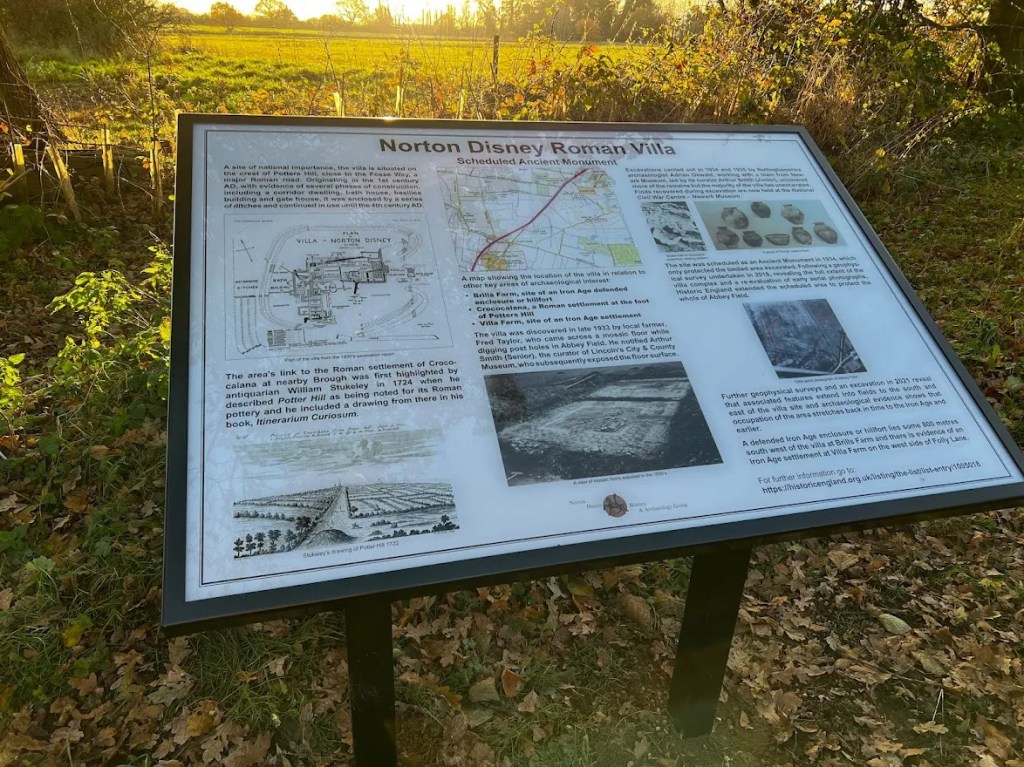
The Norton Disney History and Archaeology group have added an Interpretation Board at Hill Holt Wood near the villa

Returning to the family history aspect of this story, Arthur Smith senior would certainly have continued to take a vicarious interest in the site. But, how did Arthur Smith junior feel about the responsibility for the dig being taken from him? There is a clue in his text for the slides where he says that the discovery of the tessellated pavement was, “the beginning of much heart-ache, back-ache and expense.”

Being a witness to history, even history long passed, is not always easy.

References: Oswald A 1937 ‘A fortified villa at Norton Disney, Lincs’ in Antiquaries Journal 17;

https://nortondisneyromanvilla.wordpress.com

Great-Grandmothers · Uncategorized

All the Grandmothers I Will Never Know

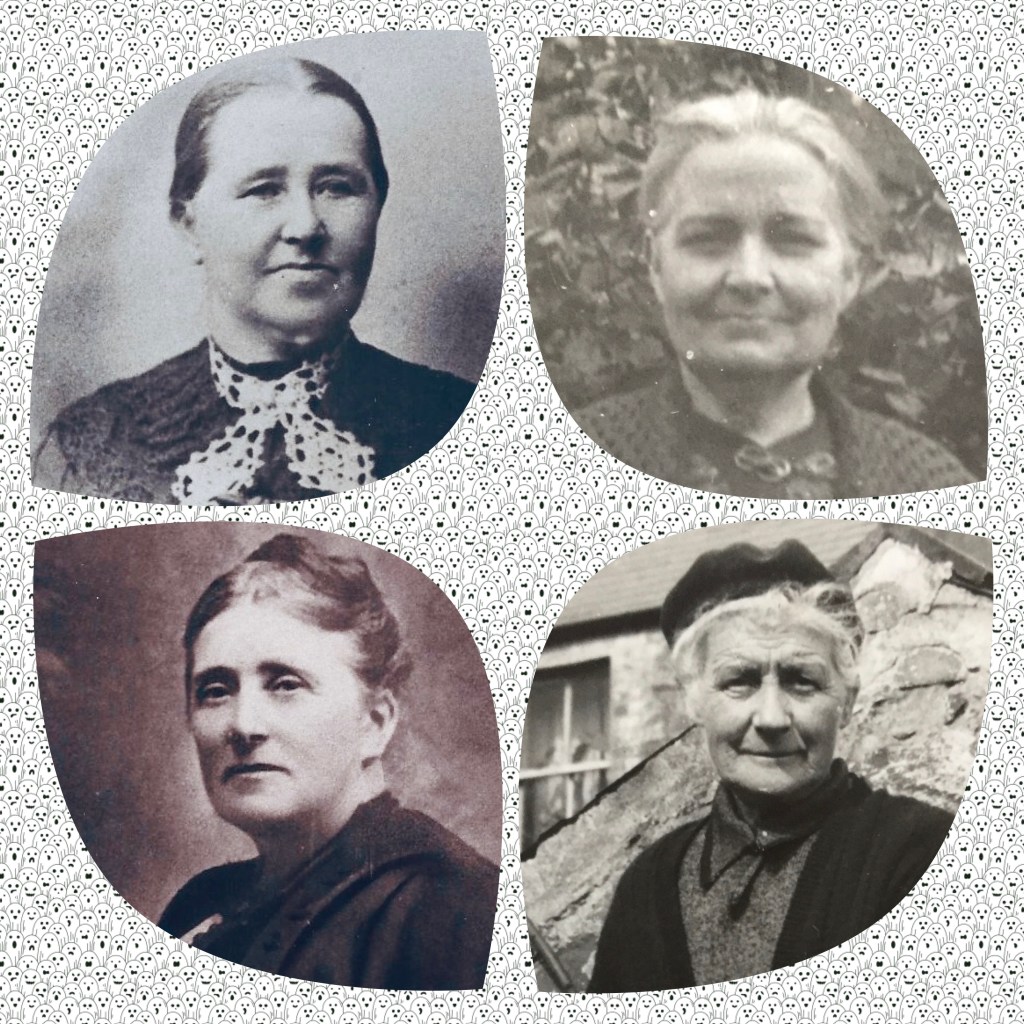
My four great-grandmothers: Top Left, Agnes McCracken, nee Kidd, 1839-1922. Bottom Left, Eliza Ann Ingram, nee Cromie, 1855-1921. Top Right Olive Johnston Curlett, nee Jones 1867-1928. Bottom Right, Grace Leslie Oliver, nee Johnston 1870-1944.

Mitochondrial Musings for (American) Mother’s Day

I was thrilled to find that I had photographs of all four of my great-grandmothers. And, trying to get a little more polished in my presentation, I have been working on an app (LiveCollage) on my phone which has myriad backgrounds and formats for displaying photos. All was well and good as I created to my heart’s content. I was delighted with the result, that was until I saw the photo on my laptop screen. The background that I had chosen as the best color to tie the photos together had a spooky Halloween theme! After panicking and tinkering for a bit it occurred to me that the little ghosts, rather than being out of place, were quite fitting. They are there representing all the women who came before, the mothers upon mothers upon grandmothers I will never know.

Although these four ladies’ names have always been known to me, the only one I really felt a personal connection to was Grace (Johnston) Oliver. In childhood I was often with Grace’s daughter, my maternal grandmother, Maisie (Oliver) Johnston and heard the stories of her life. Grace died fifteen years before I was born, but when I was a teenager I was given a personal memento, her wedding ring, which I wear on the middle finger of my right hand to this day. I wore the ring, a wide rose-gold band, in the early days because I liked it and thought nothing of the significance. Now it seems appropriate, the mother-daughter-mother-daughter bond is strong and the older I get the more I see what I inherited from my mother, my grandmother and by extension my great-grandmother and beyond. And genetically speaking, Grace is the source of my mitochondrial DNA (mtDNA).

Not to Get Too Technical

MtDNA is the tie that binds. Passed from a mother to all her children, male and female, it is passed on only by her daughters. Our mtDNA stretches back in an unbroken line through our maternal ancestors remaining unchanged from generation to generation. Mutations do occur but rarely. This means that for genealogists, mtDNA is not very useful as we match so many people in the same way, but occasionally it can be helpful to resolve specific problems. Ever curious about my own DNA, I had both my mtDNA and my father’s tested. While my Dad had hundreds of matches, I was surprised to discover that I had only nine, none of whom seemed to have the remotest possibility of being related to me in recent time. It turns out I belong to a relatively rare mtDNA group, I3. And as I looked into my own family I realized that I would need to go back at least to the early 1800s to find matches if any existed. I am an only daughter as was my mother. My grandmother had three sisters, but none of them had children, my great grandmother, Grace (Johnston) Oliver had two sisters, one died as a teenager from tuberculosis, the other sister, Rebecca (Johnston) Lockwood, had two daughters, neither of whom had children. This takes us back to Grace’s mother, my great-great-grandmother, Mary Kee. I do not know if Mary had sisters, she was born about 1833, long before birth registration began in Ireland.

Oliver and Lockwood Families

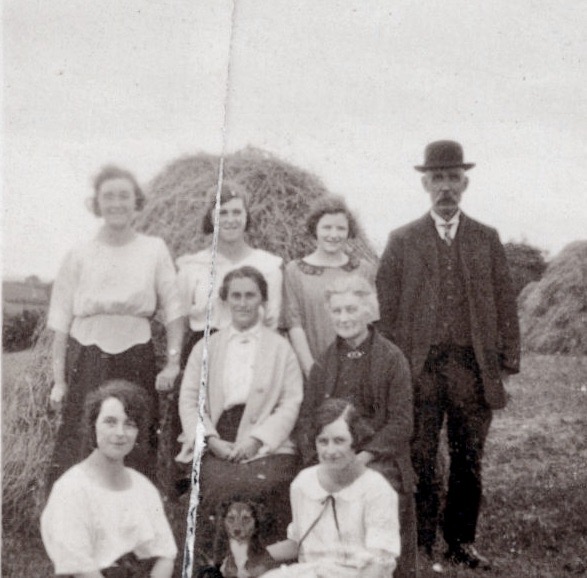
Taken in the late 1920s, here’s a fuzzy photo of my mitochondrial family plus my great-grandfather, Thomas Oliver, in the fields at Drumcaw, Co. Down. Left to right back row: Maisie Oliver, Annie Oliver, Ray Lockwood. Seated ladies: Rebecca (Johnston) Lockwood and Grace (Johnston) Oliver. Kneeling in front Eva Oliver and Ena Lockwood. (I don’t know the dog’s name!) Only Maisie, my grandmother, had children.

Like every genealogist whose family hails from Ireland, north and south, I know the chances of finding records before 1800 to prove any DNA connection, mitochondrial or otherwise, are slim to remote, but, like every genealogist everywhere I live in hope that one day the very document I need will turn up!

It struck me that while I could not add any rungs to the family tree with my DNA, I could see the subtle effects of that mother to daughter inheritance in my own life. The unconscious patterns we learn at our mother’s knee remain strong in us. How many times did I find myself doing or saying something with my children that made me think of my mother? Uncountable. And now I see my own daughters as mothers and reflect on the same patterns repeated. So much is different from generation to generation and yet we have a common framework we draw on.

I finish here with a poem that I wrote a couple of years back as I reflected on Grace (Johnston) Oliver’s ring.

The Keeping Ring

The hand that clasped and kissed the infant’s fists

was first the baby’s hand that stroked her mother’s breast

was the hand that clasped and soothed her kin, 

was later soothed herself, in death,

was the hand that wore the ring I now wear on mine.

The hand that clasped, kept close the ring,

was the hand that bent and trimmed her daughters

in the cradle customs of rebuke and joy,

was the hand that gifted me

with the minute skills of motherhood.

The hand that clasped, kept close the ring,

held fast,

unbroken in the chain of hands, 

that stitched for me a teasled thread of

precious gifts from

all the grandmothers I will never know.

Lyn Lloyd-Smith 2021

Uncategorized

It All Begins with Me (and You and Aunt Ada)

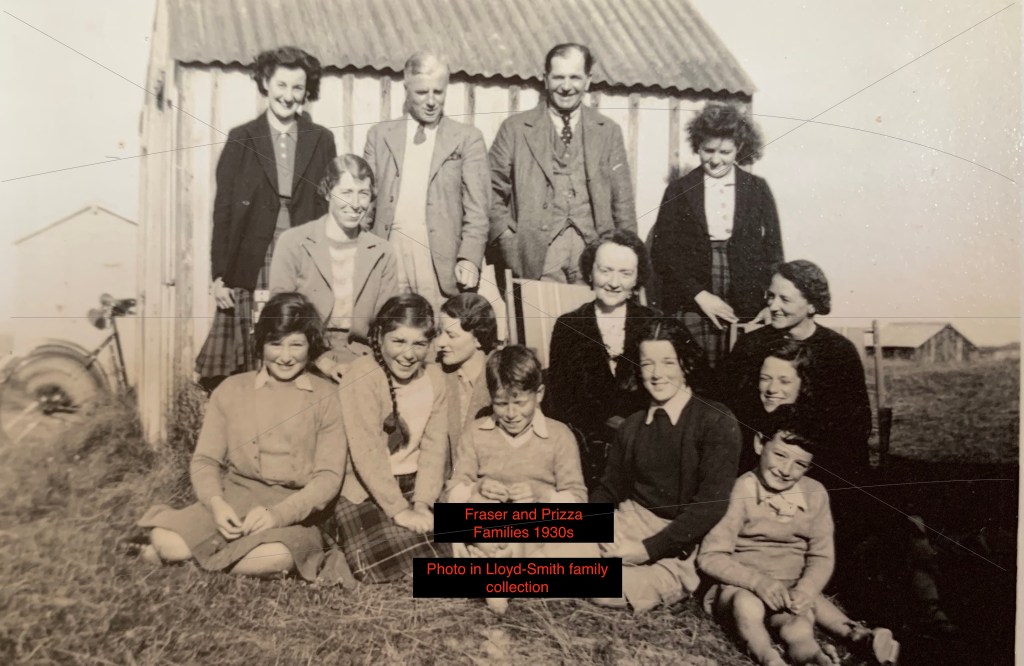
When Cousins Meet. Family reunions are a chance for conversations about the ancestors. This photo from the late 1930s shows the Fraser family of Croy, Inverness-shire, Scotland meeting up with their cousins, the Prizza family from Prague.

The First Law of Genealogy, if such a thing exists, is to start with yourself and work backwards.

Talk to your family members while you can, ask them basic questions, find out what information they have before it is too late. You may not be who you think you are, the advent of DNA testing has brought this uncomfortable truth home to many.  Long before DNA tests were a thing, people had big surprises when they started investigating their ancestry; there is nothing new under the sun (especially when it comes to human relationships).

Numerous lists of the relevant and important questions to ask are out there in books and on websites. What I want to talk about here is how to ask those questions and discuss some problems that you will find with the information you receive.

Let’s start with a multiple choice question.

Is your Family:

A Always truthful

B Deluded

C full of dissemblers and obfuscators!

 D All of the above

No matter what you might think right now, the answer is more than likely D, all of the above.

I first heard an apocryphal story when I was studying for the IHGS (Institute of Heraldic and Genealogical Studies) Certificate with Richard Baker. It goes like this. A certain lady believed she was descended from one of the Dukes of Buckingham. She spent time and effort over a number of years following the descendants of the various Buckingham names but could never find a connection to her own family. Then, she did a genealogy course where she learned to research starting with herself and working backwards. She talked to family, looked at censuses and birth, marriage and death records, did her homework and discovered that her great grandfather had owned a pub called The Duke of Buckingham.

Her family story was partially true, there was a link to the Duke of Buckingham, it was just by brick and mortar rather than by blood.

Brush up on your Conversation Skills

So, let’s talk about your Aunt Ada. She is the last person left alive in the oldest generation, your great-aunt, your grandfather’s youngest sister, who is approaching 85 years old. You have arranged to visit to ask a few questions.

Aunt Ada may be a friendly lady who loves visitors and plies them with tea and cakes, a people pleaser, she will try her best to give you answers. She may equally be a curmudgeon who does not suffer fools gladly. You will only get the information she wants to give.

You go along with your fancy iPhone to record the conversation.  Aunt Ada might be thrilled by new technology but unable to understand why you are recording her, caught up in the moment she may embellish just a little… Aunt Ada, on the other hand, could be distrustful of modern gadgets and think you are there to take advantage of her. 

Explain the technology you are using. Don’t use it if she is uncomfortable. A pencil and paper are still the simplest way of recording information. Talk to Aunt Ada about her interests (find out in advance what they are if you haven’t seen her since you were 6 years old). Do not press too hard for answers where none are forthcoming; you do not want to fluster your elderly relative into giving you wrong information. 

Remember that Aunt Ada is not obliged to tell you what she knows. Be nice to her! I am reminded of the Aesop Fable about the north wind and the sun, gentle persuasion is more effective than hostile questioning. (I love Aesop’s Fables.) https://aesopsfables.org/F6_The-Wind-and-the-Sun.html . .

Ask factual questions by all means, these are the bread and butter of genealogy but ask some opened ended dessert questions as well. What did you think when your brother moved to Australia? How did your mother feel? (This may recall a memory of an older family member who also emigrated.)

Listen! This is not about confirming what you already know but about finding new information. None will be forthcoming if you do all the talking.

Keep in touch.  Arrange a subsequent visit or phone-call as Ada may then have had time to think about some of the questions you asked. 

Family Feuds

It may be that great Aunt Ada has not spoken to your side of the family in many years and has no intention of rekindling the friendship, she still holds a grudge against your grandfather for borrowing money from her when she was sixteen; money, she says, he never repaid. In this case it can be useful to enlist the help of another family member. Second cousin Bella who picks up prescriptions for Aunt Ada, could be just the person. Bella is a chatty, helpful person who hasn’t a clue how to use the recording app on her phone but she does have a level of trust with Aunt Ada that you don’t and although she may not ask all the right questions, she may gain information you would never have found out. As it turns out, Aunt Ada fell out with your grandfather because he beat up the boy (from the wrong religion) that Aunt Ada loved. She was willing to tell Bella, but not you. All these years later she hasn’t forgiven her brother or his descendants

Friends and Neighbours know your business too

Now that you are perfecting your interview techniques, take those conversation skills further.

Speak to other family friends and neighbours, anyone who is willing to talk to you. They may have the same story passed down in a different version or they may have been privy to a family secret that no one in your immediate family is willing to tell you.

Write it down

You’ve had your conversation with Aunt Ada and second cousin Bella. Now what do you do? Transcribe it straightaway.

In the moment you will remember the context. Did you think Aunt Ada was spinning tales in responding to a particular question or, hesitant to give an answer? If you wait for years before you start researching (as many of us do) you will have forgotten about your doubts. Note those passages in a different colour of ink/type.

Good Luck!

Uncategorized

This is where Belonging and Genealogy Walk Arm in Arm

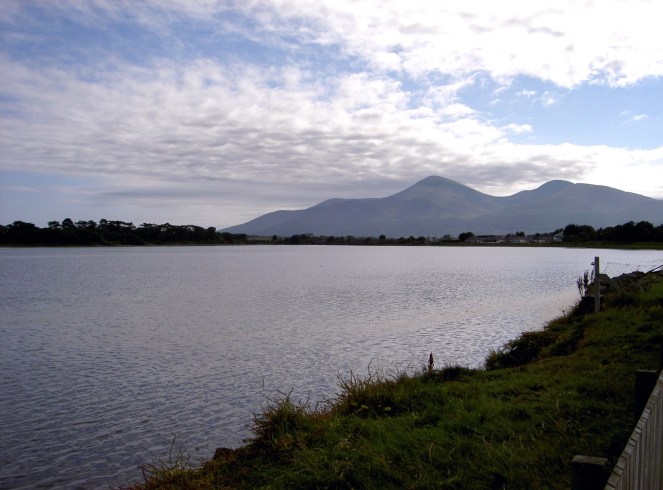
          To Be where Dark Mourne Sweeps Down to the Sea  

It took a pandemic to propel me into writing about this ache for home.

And a comment from a genealogy contact online.

“What,” she says “is a girl from the Mournes doing in California?”

“It’s a long story” I say.

The question feels all the more poignant because coronavirus has broken a bargain of 40 years.

Work has taken us to many places, fifteen homes in 25 years.  But, never completely away from County Down. Yes, I’ll go to live in Switzerland but every year I will be winging my way back to the Mournes. Our children may speak French at school but they will need to know the love and raw edges of their origins.

Yes, I’ll live in America but I will always need to feel the assault of the wind blowing sideways from the shore at Newcastle.

“Your head’s cut” I hear my family say, “no-one misses an east wind!”

No pretense is allowed. Everyone knows who you are. As a young adult I left to seek the anonymity of the city; the freedom to re-invent myself. Somewhere in the reinvention I learned that roots mattered.

For many years I would talk to family about their memories of their parents and grandparents, of the fields and farmhouses scattered across County Down, in the watersheds of the Mournes, where they had spent their early years and adult lives. I loved their stories of farming and wartime and change. It all seemed so distant, an underlying landscape, so disconnected from my life which was full of the upheaval of moving from country to country, finding schools for my children, adapting to living in different cultures. This was my change, so immediate, so time consuming, but home, it remained the same.

I was wrong, of course.

Gradually, then suddenly, the loved ones and their stories were no more. In January of 2021 my father died of COVID, I had not been able to visit him for over a year because of the pandemic. I watched his funeral by Zoom. The final link was broken. All the people who remembered my childhood had gone.

The man in the supermarket will no longer say “Your grandmother and mine were at school together” because I do not have one or other of my parents by my side as a clue to my identity.

The woman serving coffee at church will not tell me that she is a distant relative on my mother’s side, unless I explain who I am.

The mountains are still there, no less beautiful but, oh, so much emptier . More than ever I yearn to drink in the clear air, to distil that sense of home, to gather in the ties of kinship. The stories I collected, the documents I recorded, the churchyards I may still visit, these are the tangible memories of all those who went before.

This is where belonging and genealogy walk arm in arm.

Uncategorized

The Road to Perfect Filing is Full of Holes

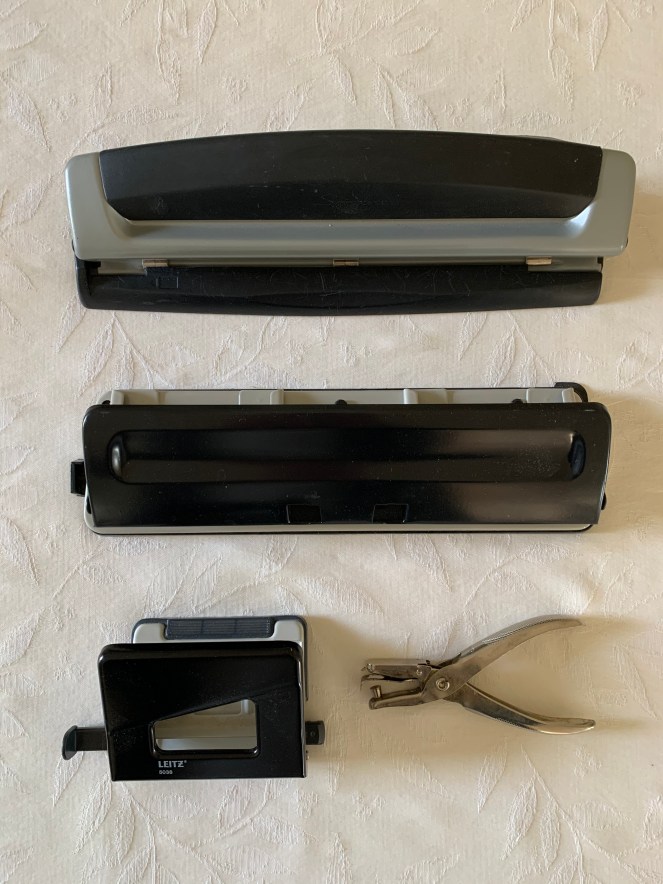
American three hole punch, Swiss four hole punch, two hole punch and one hole punch

A Riddle : What has four holes in Switzerland, three holes in the United States and two holes in Britain?

Answer: A hole punch. 

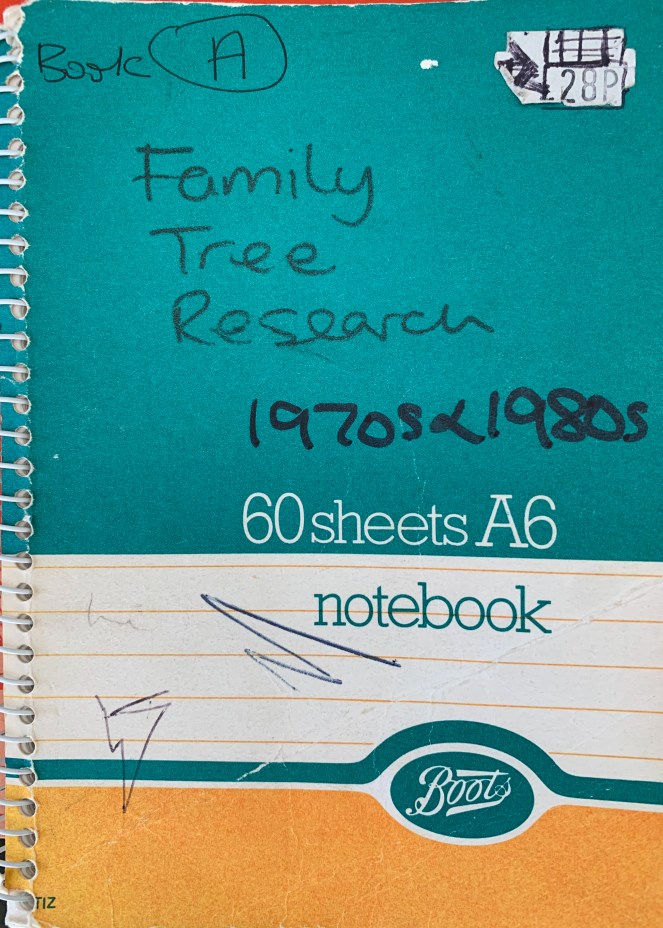
It all started with scraps of paper and names written on the backs of envelopes. I kept them in a shoe box. Later, as a teenager I wrote these few details I had on my forebears neatly into a notebook. Alas, I am a sporadic organizer and the pages were soon filled with doodles and nameless telephone numbers. Back then I saw these scribbles as prompts, I never imagined one day I would have forgotten what my hieroglyphics meant.

Fast forward to the 1980s; my collection of random family facts, both for my own and my husband’s ancestors, were outgrowing the shoebox. I repurposed my university folders (American English binders, but that’s another story,) to hold those diverse “documents’ , roughly by family name, each one punched with my trusty British two hole punch. I needed more folders, and as we were living in Switzerland at the time where the folders have four rings, I also bought a newfangled four hole punch. The four holes did not line up with the two holes on the already punched pages. Anyone who has ever put a sheet of paper in a ring folder knows that eventually some of those holes mysteriously tear through to the edge of the sheet. The problem is infinitely worse when you have 6 holes. My poor documents looked like Swiss cheese.

,By the 1990s we were living in the US and I had no choice but to get American folders, oops, sorry, binders, for my ever expanding piles of research, and, yet another hole punch, this time with three holes. And yes again, you’ve guessed it, the three holes did not line up with any of the holes on the British or Swiss punched pages. Some of those papers, which had migrated several times, now had perforated edges. 

A few years ago when my mother in law went into residential care we cleared out her home in England. In the attic, under the eaves were fifty, full, file boxes. It was a massive job to sort through them and it sent me home with a determination to streamline my own stacks of folders, binders and files. The new, organized me has bought matching 2 1/2 inch and 3 inch American ring binders. I have ruthlessly disposed of my crumbling European folders. Holey pages, however, are not the only problem. European A4 paper is larger than American letter paper so sheets that were already in American size binders were frilly and chewed around the outside edges. I have resorted to the guillotine, my A4 pages cruelly reduced to measure 8.5 x 11 inch.

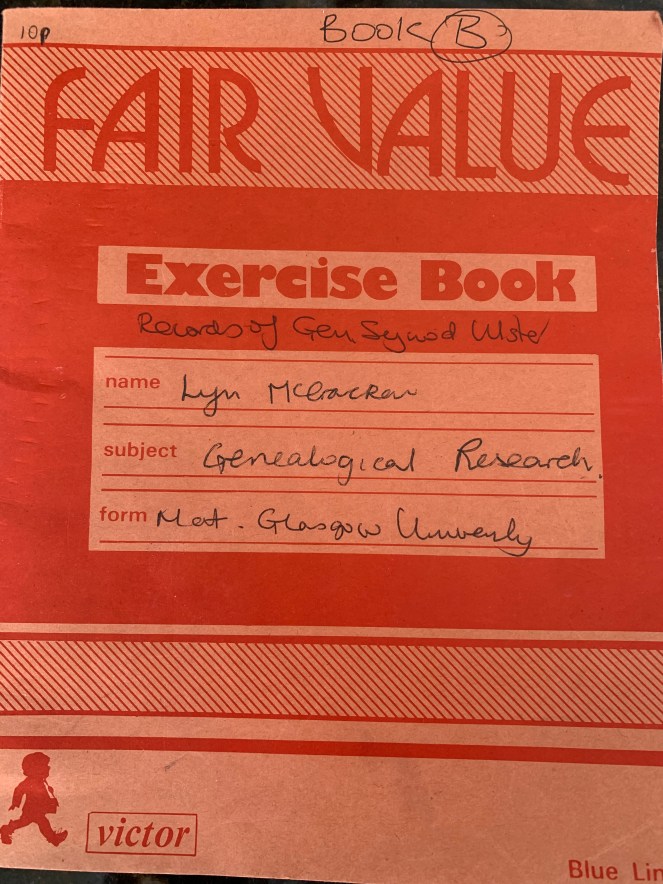
There is satisfaction in this work, but sadness also. By definition a genealogist is a gatherer and, no, I haven’t been able to throw away my sheets of mismatched, unused papers and, naturally, I still have a shoebox full of hole punches.

xx