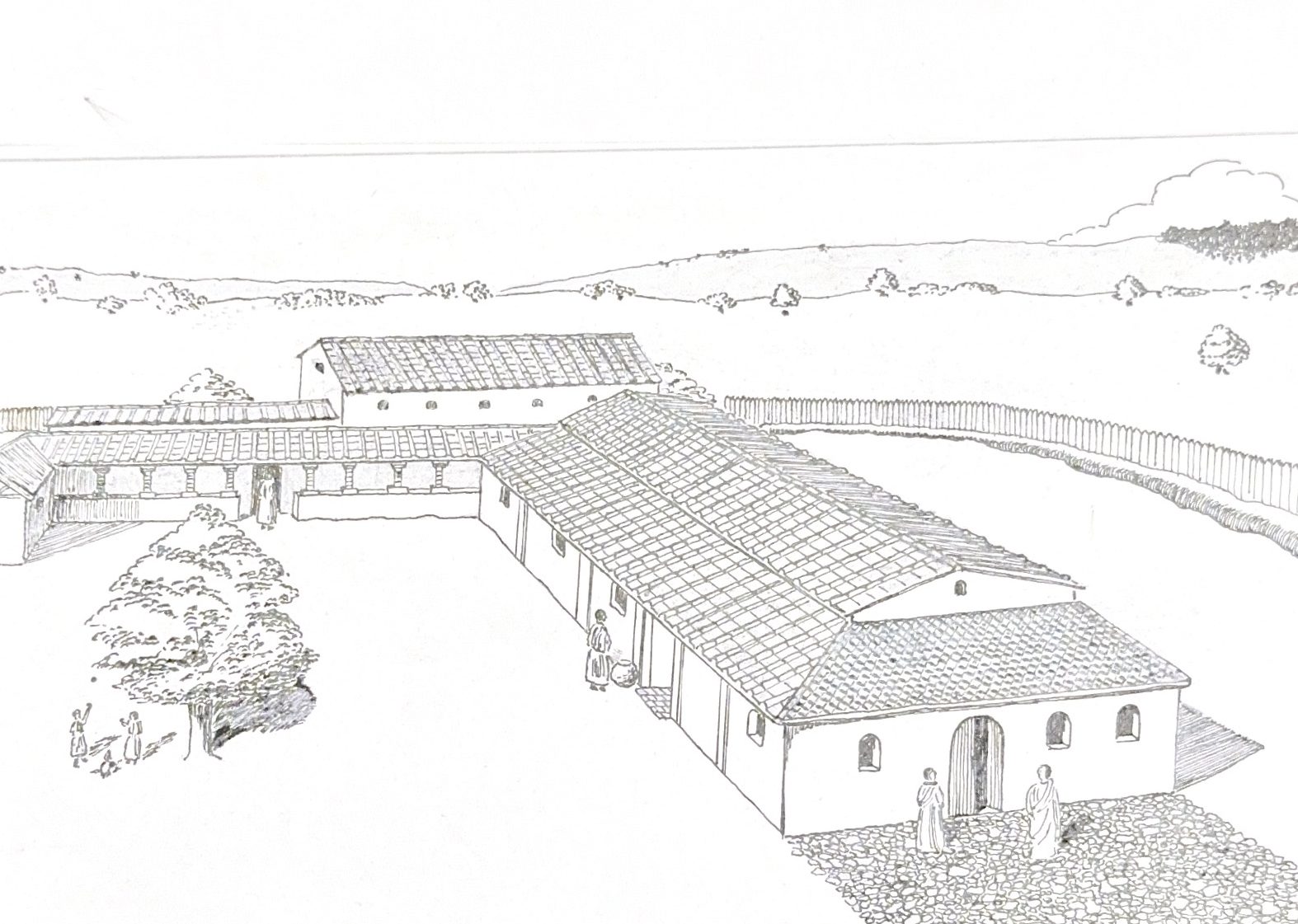
A sketch of the Roman Villa excavated at Potter Hill, Norton Disney, Lincolnshire
In an attempt to get me started on writing this blog, I have signed up to the Amy Johnson Crow 52 Ancestors 2024 prompts. I’ve still managed to miss the first 3 weeks of 2024, but here, finally, I have some inspiration. This is the story of how my husband Malcolm’s grandfather and great-grandfather were directly involved in uncovering ancient history and creating a little bit of history of their own in the process.
Arthur Smith junior, Malcolm’s grandfather, was for 41 years (1919-1960) the curator and librarian at the Gilstrap Museum and Library in Newark-on-Trent, Nottinghamshire. He was the son of Arthur Smith senior, who was the curator of the Lincoln City and County Museum, Lincolnshire from 1900-1934. The two men, father and son, were alike in many ways, including similar interests in historical research and archaeology and no doubt, their museums being only 20 miles distant from each other, they often had reason to collaborate.
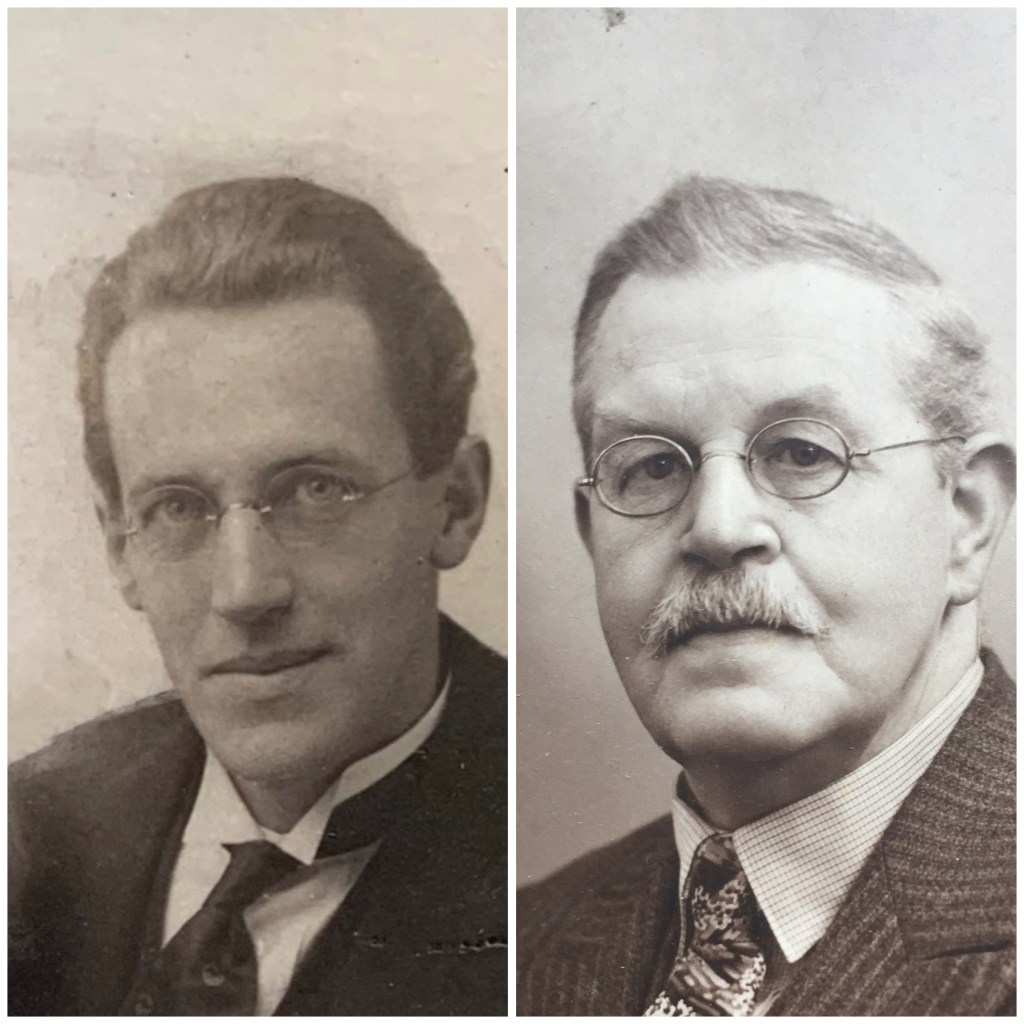
Above left: Arthur Smith 1893-1979 Above right: Arthur Smith 1869-1949
One of the family stories about the two Arthurs was that they had jointly excavated a Roman villa on the Lincolnshire/ Nottinghamshire borders.
We had no details on the excavation but after a recent conversation, I did a google search for “Roman Villa, Nottinghamshire” which brought up a 30 minute talk on the Collingham and District Local History website, by Richard Parker, on the Potter Hill Roman Villa at Norton Disney https://www.youtube.com/watch?v=vCsrSOd0YZg. Richard, a local historian, has thoroughly researched the excavation of the villa and other archaeology that lies in the surrounding area. The field where the villa lies has been threatened by development and, as a result of Richard’s work, the entire site, not just the villa, has been scheduled by Historic England. This means it is considered nationally important.
While I expected that there might be some mention of the two Arthurs, imagine my surprise when 5 minutes into the talk, Richard went into detail on the discovery of the villa, how in 1933 a farmer by the name of Fred Taylor had walked into the Lincoln Museum to find Arthur Smith senior and produced a handful of tesserae from his pocket.
“Where on earth did you get those?” was Arthur Smith’s astonished question. Arthur senior then got onto his pushbike and pedalled down the Fosse Way to Potter Hill, where he found an archaeological treasure. He enlisted his son, Arthur junior’s help and within a few weeks they had excavated a Roman pavement. This was big news at the time and gained widespread attention, but the excavation site was kept secret.
From here onwards, the plot thickens. Arthur Smith senior, possibly because he was approaching retirement, or, because the responsibility for the site was in Newark rather than in Lincoln’s purview, handed oversight of the dig to Arthur junior. The archaeological establishment did not appreciate this move as Arthur junior had no previous excavation experience.
Richard Parker tells us that there is an extensive file at the National Archives on the case with letters from other archaeologists to the Inspector of Ancient Monuments objecting to Arthur junior taking over the site, one even going so far as to say he was sending out spies to discover the location. There is a letter from Arthur junior himself saying that he will fight to the last drop of blood to retain control of the dig.
The Inspector of Ancient Monuments scheduled the villa site in May of 1934. The Office of Works appointed an academically qualified archaeologist, Adrian Oswald, who worked in conjunction with Newark Museum.
Anyone who has seen the film “The Dig” may be experiencing déjà vu at this point!
In the end there were two seasons of digging in 1934 and 1935. A Roman villa, more akin to a large country farmhouse than a palace, was uncovered together with many artifacts.
I sent an email to Richard Parker telling him how excited we were to hear the story of the excavation. He sent me a link to slides of the dig from the 1930s.
Among family papers we have a lovely old wooden box with Arthur Smith’s name on it. A search through it uncovered the text of a slide talk on the dig that Arthur had given at various points between 1937 and 1969. It turns out that this matched Richard’s slides; we had two pieces of the same puzzle. Richard was able to marry the text and slides together and gain further insight into the excavation.
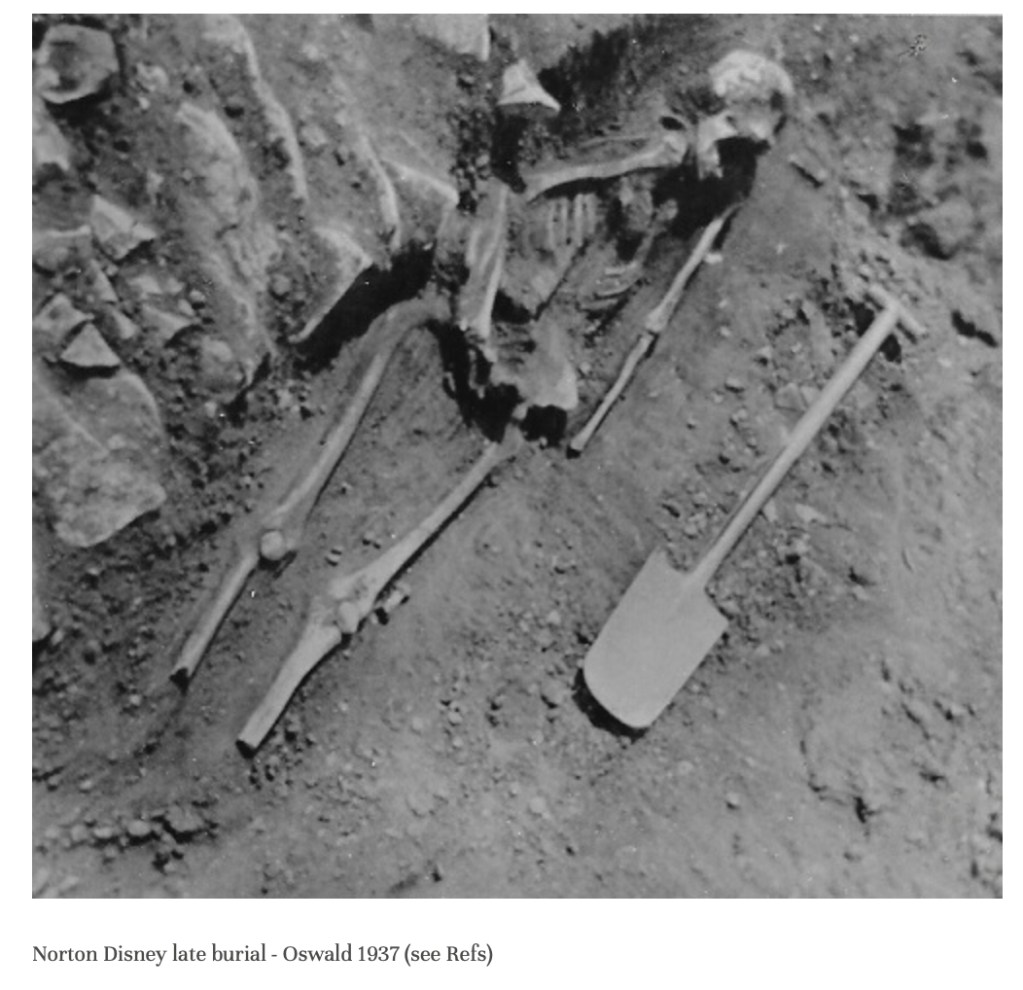
One of these slides was of a skeleton without feet. The appointed archaeologist had hired the road diggers and their machinery from Newark Corporation to help at the site. There was speculation that this heavy machinery was the reason for the skeleton’s missing feet. Arthur Smith junior was the most meticulous of men; a family story goes that he trimmed the edges of his lawn with nail scissors. He would not have been amused by rough and ready digging!
There is so much more to the story of Norton Disney Roman Villa. It is still being added to as small digs have restarted in recent years. In the 2023 season a Roman dodecahedron was uncovered and featured this January on the BBC television program, Digging for Britain. The site itself is considered important as it tells the story of a transition from an Iron Age Society to a Romano-British one.
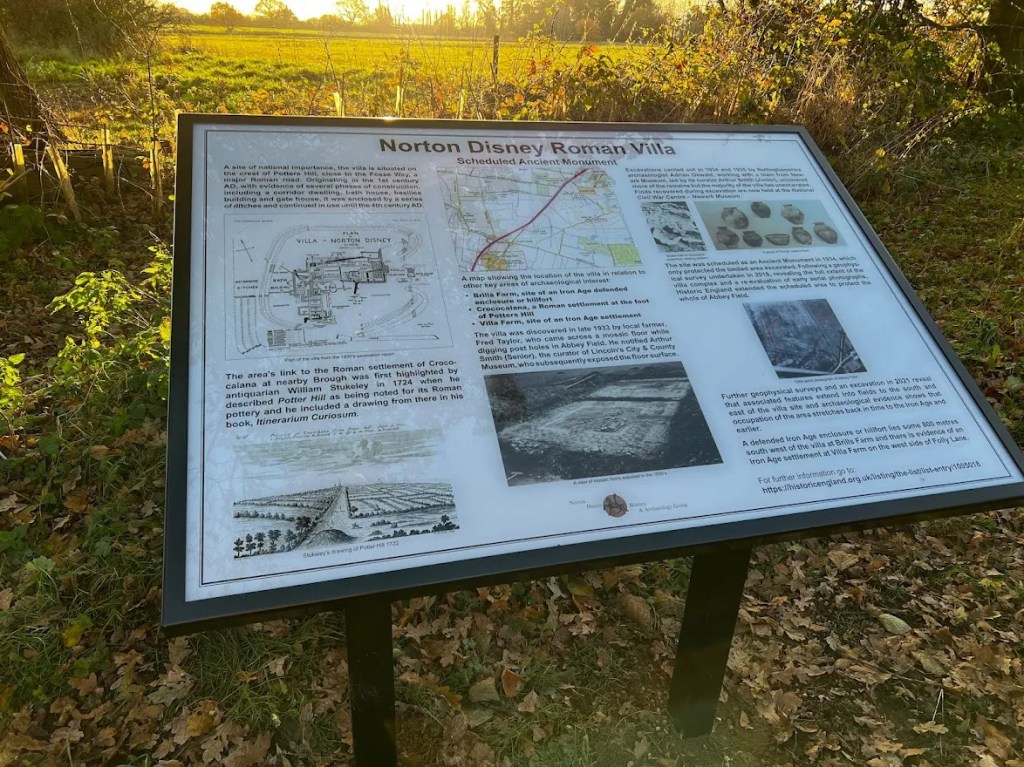
The Norton Disney History and Archaeology group have added an Interpretation Board at Hill Holt Wood near the villa
Returning to the family history aspect of this story, Arthur Smith senior would certainly have continued to take a vicarious interest in the site. But, how did Arthur Smith junior feel about the responsibility for the dig being taken from him? There is a clue in his text for the slides where he says that the discovery of the tessellated pavement was, “the beginning of much heart-ache, back-ache and expense.”
Being a witness to history, even history long passed, is not always easy.
References: Oswald A 1937 ‘A fortified villa at Norton Disney, Lincs’ in Antiquaries Journal 17;

 Gathering the Ancestors